Overview
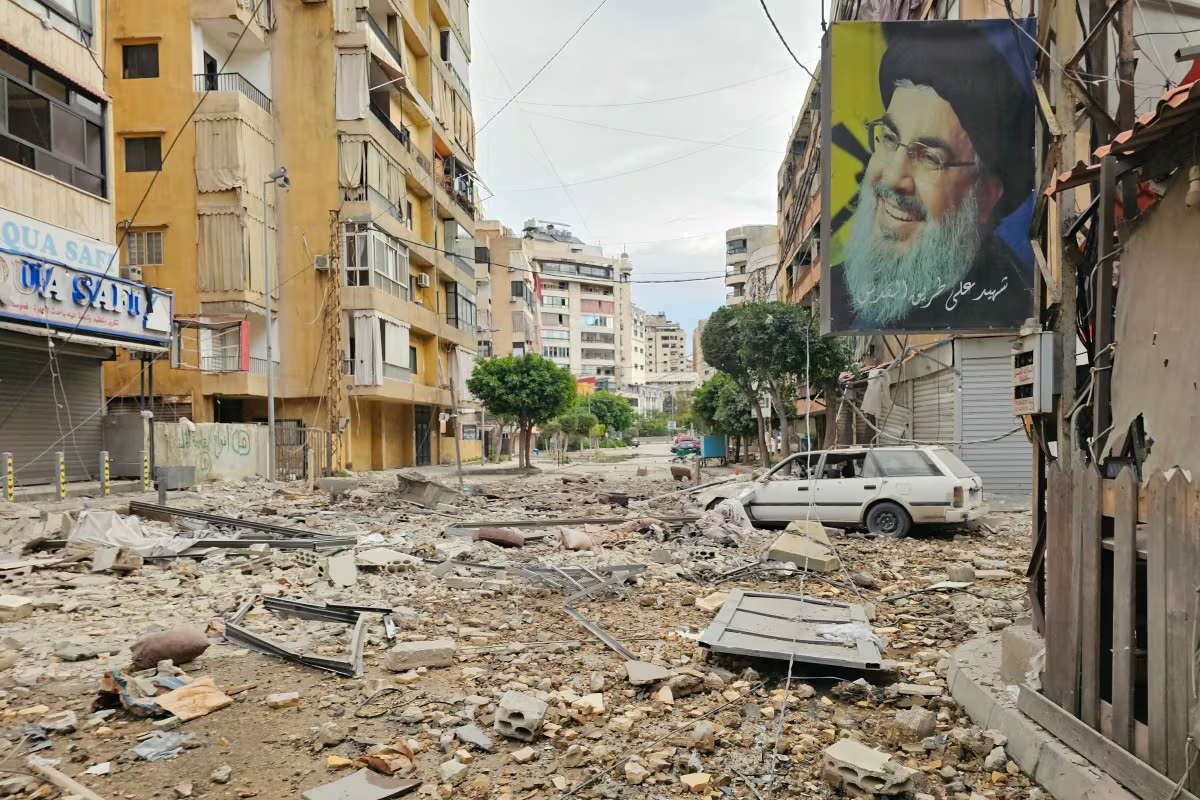
The Islamic Republic of Iran is engaged in a military and strategic confrontation with the United States and Israel that has transformed the security balance of the Middle East. The dispute combines three interdependent dimensions: the degradation of Iran's military and nuclear capabilities, competition over the control and security of Persian Gulf shipping lanes, and an internal crisis of legitimacy, governability and economic stability. From February 2026, the confrontation ceased to be limited to indirect operations and became a regional interstate war.
The current military phase began on 28 February 2026, when the United States and Israel launched a joint offensive against Iranian military installations, nuclear-related infrastructure and command structures. The strikes killed Supreme Leader Ali Khamenei and senior military and political commanders. The Assembly of Experts appointed his son, Mojtaba Khamenei, as successor in March. The new leadership took office amid war, institutional decline and the growing influence of the Islamic Revolutionary Guard Corps (IRGC), which expanded its weight in security and foreign-policy decisions.
The confrontation quickly spread across the region. Iran responded with missile and drone attacks on Israeli targets, US military installations and positions in Gulf states. The threat to disrupt transit through the Strait of Hormuz and operations against commercial vessels triggered an energy and logistics security crisis. The United States responded with a naval blockade of Iranian ports, and attacks on vessels continued even after attempts at de-escalation.
A Pakistan-brokered ceasefire in April 2026 temporarily halted large-scale fighting. In June, Washington and Tehran signed a memorandum of understanding that opened a 60-day negotiating window. The agreement did not resolve differences over the nuclear programme, sanctions, the naval blockade and navigation through Hormuz; clashes continued and the memorandum lost its standing as a negotiating framework. Since then the confrontation has evolved into a war of attrition, with intermittent military operations, economic pressure and indirect negotiations.
As of 12 November, the situation is neither peace nor normalisation, but neither is it a permanent air offensive comparable to the opening phase of the war. The United States maintains the naval blockade and has carried out new limited strikes on Iranian positions, while Tehran holds to its conditions for ending the conflict. Maritime incidents continue: Iranian authorities attributed explosions and fires on four tankers to naval mines, an account Reuters could not independently verify. According to Washington Institute data, at least ten vessels were attacked in the first ten days of November, after 37 incidents in October.
The nuclear question is the main long-term strategic problem. The strikes of 2025 and 2026 degraded declared facilities such as Fordow, Natanz and Isfahan, but did not eliminate technical knowledge, industrial capacity or all the nuclear material Iran had accumulated. The halt to inspections makes it impossible to establish with certainty the volume, location and condition of the enriched uranium. The IAEA has warned that the loss of continuity of knowledge over that material is a proliferation concern requiring urgent attention.
On the domestic front, the regime faces the economic consequences of the war, international sanctions and the naval blockade, as well as a crisis of legitimacy that predates the military confrontation. The January 2026 protests and the repression that followed showed that social discontent persists. Ali Khamenei's succession did not resolve tensions within the power structure and left the new supreme leader dependent on the military and security apparatus.
The main short- and medium-term risk is a gradual escalation that turns maritime incidents and limited strikes into a new phase of open confrontation. The Strait of Hormuz is the region's main point of vulnerability because of its weight in global energy trade. At the same time, the absence of nuclear verification and of any agreement on the enriched material keeps open the possibility of a new proliferation crisis.
Current situation
Military confrontation: from the initial offensive to a war of attrition
The war that began on 28 February 2026 substantially altered the military relationship between Iran, the United States and Israel. The joint offensive's declared objectives were to degrade Iran's nuclear, ballistic and military capabilities and to weaken the regime's command structures. The strikes hit military installations, air-defence systems, missile infrastructure and IRGC-linked centres. Israel focused part of its operations on Iran's power structure, while the United States took part in the campaign against military and nuclear targets.
Ali Khamenei's death in the opening strikes was an event of enormous political significance, but it did not cause the immediate collapse of the regime. The security structures, the IRGC and the institutions of the Islamic Republic retained their capacity to coordinate and respond. Mojtaba Khamenei's appointment formalised the succession, although the new balance of power remains shaped by the influence of the military and security structures.
Iran responded with missile and drone attacks on Israel, US installations and targets in Gulf states. That strategy raised the regional cost of the war and sought to increase pressure on Washington and its partners to halt operations. Iran's capacity to threaten energy infrastructure, military installations and shipping lanes remains an instrument of deterrence, even after the damage suffered by its conventional capabilities.
The April ceasefire and the June memorandum did not resolve the causes of the confrontation. In the following months incidents persisted and limited US strikes resumed. In November the United States struck Qeshm Island, in Hormozgan province, on at least 2, 6 and 8 November; Washington described these operations as defensive actions against radars, air defences and launchers. The confrontation continues below the threshold of a general offensive, but without any effective suspension of military operations.
Strait of Hormuz: the main focus of regional risk
The Strait of Hormuz has become Tehran's main arena of strategic pressure. Its geography and its weight in oil and gas transport make it a lever of influence over energy markets and the Gulf states. During the war Iran threatened to disrupt navigation and attacks on commercial vessels were recorded, while the United States imposed a naval blockade on Iranian ports.
The maritime situation remains unstable. On 12 November Reuters reported that Iranian military authorities attributed to naval mines the explosions suffered by four tankers over two days, an account the agency could not independently verify. Separately, the UK agency UKMTO reported a vessel hit by an unidentified projectile near Ras al-Khaimah, in the United Arab Emirates, whose fire forced the crew to evacuate.
Attacks on vessels intensified in October and in the first days of November. According to Washington Institute for Near East Policy data cited by Reuters, there were 37 attacks in October, the most intense month since the war began, and at least ten in the first ten days of November. Although traffic had partially recovered, persistent incidents keep insurance, freight and naval-security costs high.
The US blockade is also an instrument of economic pressure: restrictions on exports and port activity limit Iran's ability to earn revenue and sustain its supply chains. Tehran regards lifting the blockade as a precondition for any agreement, which makes Hormuz a space of military, economic and diplomatic confrontation at the same time.
Nuclear programme: loss of verification and proliferation risk
The nuclear programme is one of the war's main strategic uncertainties. The strikes on Fordow, Natanz and Isfahan damaged key facilities, but do not allow the conclusion that Iran has lost all its nuclear capabilities or that the enriched material has been destroyed.
Before the June 2025 strikes, Iran had accumulated 440.9 kilograms of uranium enriched to 60%, according to the IAEA. The agency's Director General, Rafael Grossi, estimated that just over 200 kilograms would remain in the Isfahan tunnels and that another part is at Natanz. These volumes are estimates, not confirmed inventories: the IAEA's lack of access makes it impossible to establish with certainty the material's current location and condition.
The IAEA's September 2026 report states that, after the strikes that began in February, the Agency stopped receiving information and access to verify declared facilities, with the exception of one inspection at the Bushehr power plant. As a result, it cannot confirm whether Iran has suspended enrichment, determine the quantity and location of its enriched uranium stockpile or verify its centrifuge inventories. This loss of continuity of knowledge is a proliferation concern even without conclusive evidence that Iran has decided to build a nuclear weapon.
One of the main points of concern is Kuh-e Kolang, known as Pickaxe Mountain, an underground complex near Natanz. Satellite imagery published by international media has shown construction and reinforcement of tunnel entrances. These observations do not by themselves demonstrate an operational enrichment facility, but the site's possible function and the absence of inspections make it a central point of monitoring.
Iran's position hardened in November. On 2 and 9 November the Iranian Foreign Ministry reiterated that the country will not accept the transfer of its enriched material abroad, which limits one of the negotiating formulas that envisaged its transfer or external custody.
Diplomacy: negotiations without an exit formula
The diplomatic track remains open, but faces substantial differences over the conditions for ending the war. Pakistan's mediation produced a ceasefire in April and a memorandum of understanding in June, with a 60-day window to negotiate the nuclear programme, sanctions relief, the naval blockade and the security of the Strait of Hormuz.
The memorandum did not become a peace agreement. Continued military operations, disputes over compliance and the lack of consensus on nuclear conditions prevented a stable solution. By August, according to the UK Parliament's analysis, the memorandum had lost its standing as an operational framework and there were no active formal negotiations to end the war.
In November indirect contacts resumed through regional mediators. Iran demands the lifting of the naval blockade and of sanctions, guarantees that hostilities will cease and a new framework for navigation through Hormuz. Washington considers some of these demands unacceptable, and Tehran maintains that it will not negotiate under military and economic pressure.
On 12 November President Donald Trump removed Vice President JD Vance from the negotiations with Iran and said the United States no longer needs an agreement with Tehran. The decision adds uncertainty over the continuity of the negotiating channel and over the weight of diplomacy relative to military and economic pressure.
Domestic front: political succession, repression and economic decline
The war is unfolding on top of an internal crisis that predates the offensive. The January 2026 protests, state repression and deteriorating economic conditions reflect persistent social discontent. The regime maintains surveillance, detentions and control of communications, while economic restrictions and the blockade hit public revenue, commercial activity and household purchasing power.
Ali Khamenei's death and Mojtaba Khamenei's succession introduced a new configuration of power. Although the new supreme leader formally holds the system's highest authority, various analyses point to greater IRGC influence and increased dependence on the military and security structures. There are also internal differences over whether to negotiate with the United States and on what terms.
The economic crisis is deepening through the combination of sanctions, naval blockade, falling external revenue and damage to infrastructure. Difficulties in exporting oil and accessing foreign currency limit the government's ability to stabilise prices and sustain public spending. In this context, the risk of new protests rises if economic decline combines with a perception of institutional weakness or with divisions among regime elites.
The confrontation has also had a diplomatic expression with consequences for Argentina. On 11 November 2026 Iran designated the Argentine Navy and Air Force as terrorist organisations, in response to Argentina's listing of the IRGC in its terrorist-organisations registry. The Argentine government rejected the measure. The episode is a bilateral diplomatic escalation that may affect political and security relations between the two countries.
Historical and political context
The Islamic Revolution and the founding of the Islamic Republic (1979)
The 1979 Islamic Revolution overthrew Shah Mohammad Reza Pahlavi and ended the monarchy. The new system, led by Ayatollah Ruhollah Khomeini, established a republic based on the principle of velayat-e faqih, which grants religious leadership authority over political institutions. The structure combined electoral mechanisms with unelected institutions, such as the supreme leader and the Guardian Council, which retain broad powers.
The regime's consolidation was accompanied by the elimination or marginalisation of opposition groups, the expansion of security structures and a profound transformation of foreign relations. The seizure of the US embassy in Tehran in November 1979 and the hostage crisis set up a lasting confrontation with Washington.
The Iran–Iraq War and the consolidation of the security apparatus (1980–1989)
In September 1980 Iraq invaded Iran, starting an eight-year war that caused hundreds of thousands of deaths, economic devastation and a deep militarisation of the state. During this period the IRGC expanded its capabilities and became a central institution for the regime's defence and the projection of regional influence.
The war also reinforced Iran's sense of vulnerability to external threats, an experience that shaped the development of asymmetric military capabilities, ballistic missiles and indirect deterrence.
Khomeini's succession and the consolidation of Ali Khamenei (1989–1997)
After Khomeini's death in 1989, Ali Khamenei became supreme leader. Over the following decades he consolidated a power structure in which religious institutions, the Revolutionary Guards and the security agencies held decisive influence. Akbar Hashemi Rafsanjani's presidency promoted economic reconstruction and a limited opening, without altering the regime's core structure.
Reformism and the crisis of legitimacy (1997–2009)
Mohammad Khatami's election in 1997 opened a period of political reform and greater participation by moderate groups. Attempts to expand civil liberties and curb the power of conservative institutions met resistance within the system, and Mahmoud Ahmadinejad's victory in 2005 marked a turn towards more confrontational domestic and foreign policies.
In June 2009 Ahmadinejad's re-election was contested by large sections of the population and sparked the Green Movement. The protests were suppressed by the security forces, consolidating the dominance of conservative structures and narrowing the space for opposition.
The nuclear programme and international sanctions (2002–2018)
Revelations about undeclared nuclear facilities in the early 2000s raised international concern about the nature of Iran's programme. Sanctions by the United Nations, the United States and the European Union progressively hit trade, the financial system and energy exports.
In July 2015 Iran and the P5+1 reached the Joint Comprehensive Plan of Action (JCPOA), which set limits on the nuclear programme and a reinforced verification system in exchange for sanctions relief. In May 2018, during Donald Trump's first administration, the United States unilaterally withdrew from the agreement and restored sanctions; Iran then scaled back compliance with some obligations and raised its enrichment levels.
The Mahsa Amini protests and social crisis (2022–2025)
In September 2022 the death of Mahsa Amini in the custody of the morality police sparked nationwide protests under the slogan «Woman, Life, Freedom». The demonstrations challenged social restrictions, institutional violence and the regime's legitimacy. The state's response included arrests, lethal force, prosecutions and internet restrictions.
The crisis of legitimacy persisted in the following years, as economic decline and sanctions weighed on living conditions. The January 2026 protests were a new expression of that social tension and were also suppressed.
War with the United States and Israel and the succession crisis (2025–2026)
In June 2025 Israel and the United States struck Iranian nuclear facilities at Fordow, Natanz and Isfahan. The operations degraded parts of the programme but did not resolve concerns about the enriched-uranium stockpile and the continuity of technical capabilities. In September 2025 UN sanctions related to the nuclear programme came back into force, after the E3 triggered the snapback mechanism in late August.
On 28 February 2026 a second, broader US–Israeli offensive began, killing Ali Khamenei and senior regime commanders. Mojtaba Khamenei was appointed supreme leader in March. The war spread to the Gulf and the Strait of Hormuz: Iran attacked regional targets and the United States imposed a naval blockade.
The April ceasefire and the June memorandum did not produce a lasting settlement. Continued strikes, maritime restrictions and disagreements over the nuclear programme kept the conflict active through the second half of 2026. As of 12 November, the Islamic Republic retains its core institutions but faces significant military, economic and diplomatic pressure.
The human, nuclear and social cost of the confrontation with the US and Israel.
Estimated fatalities
Ministerio de Salud de Irán (vía el registro de víctimas de Al Jazeera) · June 2026
60% uranium at Isfahan (est.)
Rafael Grossi's estimate (March–April 2026); another part is at Natanz. No IAEA verification since February.
Sites without IAEA access
Declared facilities blocked from inspection; only one inspection took place, at Bushehr.
The war is fought in three spaces at once: the Strait of Hormuz, the uninspected nuclear sites and the Gulf coasts.
- 1Strait of HormuzNov 2026
US naval blockade of Iranian ports and attacks on shipping: 37 attacks in October and at least ten in the first ten days of November, according to the Washington Institute.
- 2Qeshm IslandNov 8, 2026
Limited US strikes on 2, 6 and 8 November against air defences and launchers; Washington describes them as defensive.
- 3Ras al-KhaimahNov 2026
Vessel hit by an unidentified projectile; the fire forced the crew to evacuate (UKMTO).
- 4FordowJun 22, 2025
Enrichment plant struck in June 2025; no IAEA inspection since February 2026.
- 5Natanz and Kuh-e KolangJul 2026
Natanz was put out of action; the adjacent, never-inspected underground complex of Kuh-e Kolang has shown construction observed by satellite.
- 6IsfahanJun 13, 2025
Nuclear complex struck in June 2025; most of the 60%-enriched uranium is presumed to be there, unverified.
- 7BushehrSep 2026
The only facility the IAEA was able to inspect after February 2026.
- 8JaskJul 2026
Desalination plant struck in July 2026; some 10,000 people were left without water.
- 9Kuwait and BahrainJul 2026
Iranian attacks on power and desalination plants in Kuwait and on Sheikh Isa air base in Bahrain.
Over twelve days in June 2025, air and drone strikes reached almost all of Iranian territory, with more than a third concentrated in Tehran and Karaj.
430
Israeli and US air and drone strikes recorded by ACLED in Iran in June 2025, with 1,064 reported deaths.
Where they fell
- Tehran and Karaj158
- Centre: Isfahan, Qom, Arak, Natanz70
- North-west: Tabriz, Zanjan, Qazvin64
- West: Kermanshah, Hamadan, Lorestan63
- South and south-west: Khuzestan, Fars, Gulf37
- Rest of the country38
What ACLED recorded over the twelve days
- 27
- Iranian provinces hit by Israeli strikes, in more than 150 distinct locations.
- 17
- of Tehran's 22 districts were struck.
- 160+
- Israeli strikes on military targets and 10 on police bases.
- 21 M
- people exposed to the strikes, nearly a quarter of the population.
- 36
- direct Iranian missile hits in Israel, killing at least 28 people.
Who faces whom.
The main actors in the conflict, with their areas of control, their objectives and the relationships of cooperation and antagonism among them. The composition of each bloc derives from the alliances and rivalries recorded in this profile.
Around Revolutionary Guards (IRGC)
Around United States
Around Revolutionary Guards (IRGC)
Around United States
No declared alignment
Circle size shows relative influence; the blue arc, the share of territory under control. Camps are computed from the alliances and enmities declared in each profile.
Conflict severity index
CSI · IAW+7.5 · worsened against the previous assessment (October 2026).
Assessed on 12 November 2026
Five dimensions of 20 points each. One circle is one point.
Monthly trend
Each point is a dated assessment. Horizontal lines mark the step from one band to the next.
Timeline
The periods and events that shaped the evolution of the conflict, in chronological order.
1979–1989 — 2025–2026
Iran's revolutionary transformation
The Islamic Revolution, the war with Iraq and the Khomeini era
The Revolution topples the Shah and establishes the Islamic Republic under Ayatollah Khomeini. In 1980 Iraq invades Iran, starting an eight-year war that militarises the state and consolidates the Revolutionary Guards.
Actors: Ayatollah Khomeini, the Revolutionary Guards and Iraq. Consequences: Consolidation of a theocratic state; restrictions on civil liberties and women's rights; hundreds of thousands killed in the war with Iraq.A new supreme leader
Ali Khamenei's succession and reconstruction
After Khomeini's death, Ali Khamenei becomes supreme leader. Akbar Hashemi Rafsanjani's presidency drives economic reconstruction and limited opening without changing the regime's core structure.
Actors: Ali Khamenei, Akbar Hashemi Rafsanjani and the Revolutionary Guards. Consequences: Consolidation of the power of the supreme leader and the security bodies.Opening and repression
The reformist period and the Green Movement
The election of reformist president Khatami eases some restrictions; the disputed 2009 election triggers the Green Movement.
Actors: Mohammad Khatami, Mahmoud Ahmadinejad, the Green Movement and the security forces. Consequences: A brief opening of civil-society space; the 2009 crackdown leaves between 36 dead, according to the government, and more than 70, according to the opposition, and thousands detained.Consolidation of authoritarian control
Hardline rule and nuclear escalation
Ahmadinejad's second term (2009–2013) and severe international sanctions over the nuclear programme; the JCPOA, signed in 2015, is abandoned by the United States in 2018.
Actors: Mahmoud Ahmadinejad, Hassan Rouhani, the P5+1 and the United States. Consequences: Deep economic crisis; expanded surveillance; restrictions on civil liberties and women's rights.Civil unrest and mass repression
The Mahsa Amini protests and the crackdown
The death of Mahsa Amini in police custody triggers nationwide protests under the slogan "Woman, life, freedom"; the Revolutionary Guards respond with lethal force.
Actors: Protesters, the Revolutionary Guards and the judiciary. Consequences: More than 500 killed and more than 14,000 detained, according to human rights organisations and the UN; executions of protesters; internet shutdowns.Strikes on the nuclear programme, death of Ali Khamenei and a war of attrition in the Gulf
War with the United States and Israel
In June 2025 Israel and the United States strike Fordow, Natanz and Isfahan. In late August 2025 the E3 triggers the snapback, and UN sanctions return in September. On 28 February 2026 a second US–Israeli offensive begins, in which Ali Khamenei is killed; his son Mojtaba succeeds him in March. The April ceasefire and the June memorandum do not hold: from the second half of the year the war continues through limited strikes, the naval blockade and incidents in Hormuz.
Actors: Iran, the Revolutionary Guards, the United States, Israel, Pakistan, the IAEA and the E3. Consequences: Nuclear programme degraded and unverified; 3,468 dead in Iran as of 1 June 2026; associated fronts in Lebanon, Iraq and Israel; economy stifled by the blockade.
Variables the editorial team observes to anticipate changes in the dynamics of the conflict.
Kuh-e Kolang (Pickaxe Mountain)
WorseningConstruction at the never-inspected complex; a US strike would mark the biggest escalation since June 2025.
Strait of Hormuz
WorseningMines, attacks on tankers and the naval blockade: October saw the most attacks since the war began.
Negotiating channel
WorseningIndirect contacts through regional mediators; Trump removed Vance and said Washington no longer needs a deal.
Internal cohesion under the new supreme leader
WorseningGrowing IRGC weight, economic decline and the risk of new protests: regime stability is the underlying variable.
Coverage level
Active monitoring · reviewed weekly
This profile is reviewed weekly. New events are added to the timeline with their source.
Last reviewed: Nov 13, 2026.
Analysts responsible for this profile
- Luciana Lijtinstens · Researcher & Analyst — Middle East
- Inés Llapur · Researcher & Analyst — Middle East
Key sources
- Institute for Science and International Security — Analysis of IAEA Iran Verification and Monitoring and NPT Safeguards Reports — June 2026
- Al Jazeera — US-Israel attacks on Iran: Death toll and injuries live tracker
- NPR — What you need to know about the preliminary U.S.-Iran agreement signed by Trump
- Al Jazeera — Why have US-Iran strikes resumed and what does it mean for peace?
- Al Jazeera — Iran suggests MoU 'suspended' as 50 killed in US strikes in July
- Al Jazeera — Iran war updates: Trump threatens 'heavy attacks' on Pickaxe Mountain
- Axios — Trump vows U.S. will soon bomb Iran's Pickaxe Mountain
- The Times of Israel — Satellite images show construction near Iranian nuclear site, in apparent MOU violation
- ACLED — Irán
- International Crisis Group — Irán
- CFR Global Conflict Tracker — Irán
- Relator Especial de la ONU — Irán
- Misión de Determinación de los Hechos de la ONU — Irán
- OIEA — Irán
- Arms Control Association — Programa nuclear iraní
- Human Rights Watch — Irán
- Amnesty International — Irán
- UNHCR — Irán
- Carnegie Endowment — Irán
- ACLED — Q&A: Twelve days that shook the region: Inside the Iran-Israel war (4 de julio de 2025)
- ACLED — Middle East Special Issue: March 2026
- Reuters (vía Al-Monitor) — Ship attacks in Strait of Hormuz hit record high in October
- Al Jazeera — Qeshm island and Hormuz hit, as mediators try to prevent US-Iran escalation
- Tasnim — Iran rejects transfer of enriched uranium abroad (2 de noviembre de 2026)
- Iran International — Trump shifts Vance away from Iran talks, says deal unnecessary (12 de noviembre de 2026)
- Infobae — Irán designó como organizaciones terroristas a la Armada y la Fuerza Aérea de Argentina (11 de noviembre de 2026)
- OIEA — Informe GOV/2026/50 (1 de septiembre de 2026)
- Reuters (vía Algemeiner) — Grossi: buena parte del uranio casi apto para armas estaría en Isfahán (9 de marzo de 2026)
- Biblioteca de la Cámara de los Comunes — Iran in 2026
- Arms Control Association — Combates empañan los compromisos de Estados Unidos e Irán (julio de 2026)
- Al Jazeera — Cómo y por qué se cayó el memorando entre Estados Unidos e Irán (17 de agosto de 2026)
- Kurdistan24 — El OIEA no puede verificar las reservas de uranio de Irán
- PBS Frontline / Tehran Bureau — Los muertos del Movimiento Verde (junio de 2010)
 IAWConflict profileNext under weekly monitoringNigeriaArmed Insurgency and Terrorist Violence in NigeriaActive monitoring · reviewed weeklyUnder watchJihadist capability in urban centersOpen the profile
 IAWConflict profileSame region · Middle EastIsrael · PalestineArmed Conflict between Israel and PalestinePeriodic review · monthlyUnder watchAttacks after the ceasefireOpen the profile