Overview
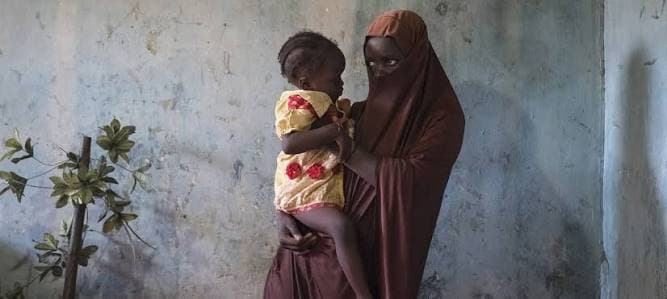
A set of overlapping armed conflicts that make Nigeria one of Africa's most violent countries: in the northeast, the jihadist insurgency of Boko Haram (since 2009) and its splinter Islamic State West Africa Province (ISWAP), at war with the state and with each other; in the northwest, "bandit" networks dedicated to mass kidnapping, extortion and rural massacres; and in the Middle Belt, intercommunal herder-farmer violence aggravated by demographic and climate pressure.
More than fifteen years of insurgency have left over 35,000 dead, some 2.3 million internally displaced and more than 425,000 refugees across the Lake Chad basin, with tens of millions facing food insecurity. The state combines military operations — supported by the regional Multinational Joint Task Force and, since late 2025, by direct US strikes against ISWAP — with local amnesties and attempted negotiations with bandit groups, without reversing the jihadist resurgence or the banditry eroding territorial control across the north.
In the northeast, the jihadist insurgency is in a phase of sustained resurgence. On 16 March 2026, a triple suicide bombing attributed to Boko Haram against the University of Maiduguri Teaching Hospital and two markets killed at least 27 people and injured 146, the first major attack in the Borno capital since 2021. On 10 April 2026, a jihadist assault on a military base in Borno killed an army general and several soldiers. ISWAP has kept up its campaign against forward operating bases: in July 2026 the army reported repelling coordinated assaults on 2, 17 and 19 July, the latter against the Gajigana base (Nganzai, Borno) by fighters on motorcycles supported by gun trucks. The most significant development of the quarter was direct US military intervention: between 16 and 20 May 2026, US special operations forces and airpower, in coordination with Nigeria, carried out a helicopter-borne raid and successive airstrikes that killed senior ISWAP figures—including Abu-Bilal al-Minuki—and, according to Nigerian authorities, some 175 ISWAP and Boko Haram fighters, following US strikes in December 2025.
Figures on the affected population, each with its source and date.
Internally displaced
UNHCR Nigeria Situation Operational Data Portal · July 2026
Refugees / cross-border displaced
UNHCR Nigeria Situation Operational Data Portal (refugiados nigerianos en Níger, Camerún y Chad) · June 2026
Population facing acute food insecurity (IPC 3+, estimate)
Cadre Harmonisé (Gobierno de Nigeria/FAO/PMA), proyección junio-agosto 2026 · November 2025
Estimated fatalities
Cifra oficial acumulada citada por el PMA/AFP (muertos por la violencia de Boko Haram e ISWAP desde 2009) · July 2026
Who faces whom.
Every actor with what they control and what they are after, and the ties of support and hostility that bind them to the rest. The camps are not assigned by hand: they come from the alliances and enmities recorded in the profile.
Around Nigerian government & armed forces
Around ISWAP
Around Nigerian government & armed forces
Around ISWAP
Circle size shows relative influence; the blue arc, the share of territory under control. Camps are computed from the alliances and enmities declared in each profile.
Timeline
The events that changed the course of the conflict, in order and with their source.
This section will be populated with historical phases
Phase Title - Pending Development
Placeholder text for timeline context
Actors: Key actors to be identified Consequences: Consequences to be documented
Concrete signals the editorial team monitors to anticipate phase changes.
Jihadist capability in urban centers
WorseningThe Maiduguri triple bombing (March 2026) was the first in Borno's capital since 2021; further urban attacks would mark a phase shift.
Continuity of US intervention
StableMay's strikes decapitated ISWAP; sustaining the effect depends on cooperation not stalling over political friction.
Assaults on military bases
StableISWAP sustains its campaign against forward bases (three assaults in July); it gauges the erosion of the military position in rural Borno.
Food funding gap
WorseningWFP can assist only 740,000 of 6.2 million in the northeast; unmet need feeds insurgent recruitment.
Coverage level
Active monitoring · review overdue
This profile is reviewed every week. New events are added to the timeline with their source, and the severity assessment is recalculated on the stated cadence.
Last reviewed: Jul 22, 2026.
This profile's review is overdue against the frequency we state (14 days of grace). We show it rather than hold up a promise we did not keep.
We publish how complete each profile is. These are the points of our editorial policy that can be checked against the data on file.
7 of 8 checks
- Conflict summary writtenDone
- Timeline with 10 dated events or morePending
- Conflict actors on fileDone
- Conflict status assignedDone
- 8 sources cited or moreDone
- Every published figure with its source and dateDone
- Geolocation on fileDone
- Historical and political context writtenDone
Four further policy points — per-claim verification and traceability, naming review and cross-review — are checked by hand and are not part of this count.
Methodology pending: This profile is in initial development. As research is completed, full documentation of data sources, analysis methods, and information limitations will be provided.
Key sources
- UNHCR — Nigeria Situation - Operational Data Portal
- UN OCHA — Nigeria: 2026 Humanitarian Needs and Response Plan
- Infobae / AFP — PMA: Unos 17 millones de personas pasan hambre por el conflicto yihadista en Nigeria
- The Guardian Nigeria — 34.7 million Nigerians projected to face food insecurity by June 2026
- Daily Post Nigeria — Troops repel coordinated ISWAP offensive on Borno military base, inflict heavy casualties
- Africanews — Nigeria: Jihadists kill army general and soldiers in attack on Borno state base
- Daily Post Nigeria — Suspected bandits kill two residents, five security personnel in Zamfara
- ACLED — Nigeria
- UN OCHA — Nigeria
- International Crisis Group — Nigeria
- Human Rights Watch — Nigeria
- Amnesty International — Nigeria
- UNHCR — Nigeria
- IOM DTM — Nigeria
- WFP — Nigeria
- UNICEF — Nigeria
- ReliefWeb — Nigeria
- CFR Global Conflict Tracker — Nigeria
IAW monitors this conflict as part of its structured early warning and analysis of West Africa.
International Affairs Watch