Overview
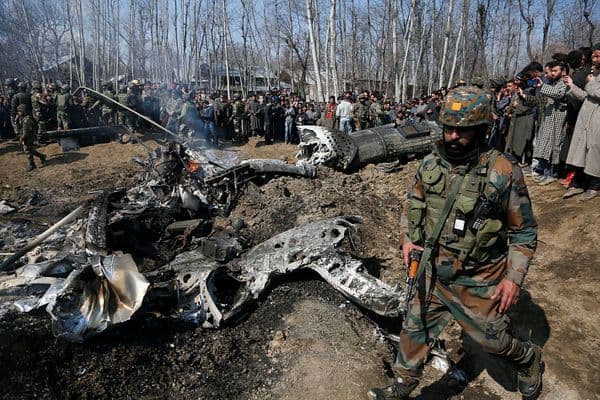
A strategic rivalry between two nuclear powers born of the 1947 Partition, with Kashmir as the central territorial dispute and three wars plus recurrent crises in its history. The May 2025 crisis — the Pahalgam attack and India's Operation Sindoor, with four days of open hostilities — marked the most serious confrontation in decades and set a new paradigm: India declares it will respond militarily to any major attack it attributes to Pakistan, and keeps the Indus Waters Treaty in abeyance as a pressure tool.
Since then the relationship has settled into cold confrontation: the Line of Control ceasefire holds, but there is no official dialogue, punitive measures remain in place and only Track II channels manage escalation risk. The picture is aggravated by Pakistan's internal security crisis — with the TTP and the Baloch insurgency at record highs and a parallel escalation with Afghanistan — and by the absence of formal crisis-management mechanisms between two modernizing nuclear arsenals.
As of mid-2026, the India-Pakistan relationship remains in a state of cold confrontation and diplomatic freeze, without a return to the open hostilities of May 2025. The Line of Control ceasefire announced on May 10, 2025 — after the four-day Operation Sindoor, launched by India in response to the April 22, 2025 Pahalgam attack (26 killed) — has generally held through mid-2026, according to the UK House of Commons Library briefing updated on June 12, 2026. However, none of the punitive measures adopted during the crisis have been rolled back: diplomatic and trade sanctions remain in place, and official dialogue channels remain in 'deep freeze'.
A nuclear rivalry without official channels: the cost is measured in risk, not only casualties.
Internally displaced
Border region displacement estimates · October 2025
Refugees / cross-border displaced
Cross-border displaced persons · October 2025
Population facing acute food insecurity (IPC 3+, estimate)
WFP cross-border analysis · September 2025
Estimated fatalities
Military casualty reports, international military analysis · December 2025
Indus Treaty in abeyance
Suspended by India since April 2025; reaffirmed in July 2026 as a pressure lever.
Track II rounds since 2025
Muscat, an Asian capital and Doha: the only active channel, focused on crisis management.
Who faces whom.
Every actor with what they control and what they are after, and the ties of support and hostility that bind them to the rest. The camps are not assigned by hand: they come from the alliances and enmities recorded in the profile.
Around India
Around Pakistan
Around India
Around Pakistan
Circle size shows relative influence; the blue arc, the share of territory under control. Camps are computed from the alliances and enmities declared in each profile.
Timeline
The events that changed the course of the conflict, in order and with their source.
1947-1965 — 2019-2026
Foundation of Indo-Pakistani rivalry
Partition and Early Conflicts
India and Pakistan partition; two wars (1948, 1965) over Kashmir and territory
Actors: Indian military, Pakistani military, nascent nations post-independence Consequences: Territorial disputes established; arms race begins; both nations become military-centric statesGreat power sponsorship and weapons development
Cold War Alignment and Nuclear Development
US supports Pakistan, USSR supports India; both nations pursue nuclear weapons programs
Actors: US, Soviet Union, India, Pakistan, China Consequences: 1998 nuclear tests by both nations; nuclear deterrence doctrine established; regional arms race intensifiesNuclear powers in direct combat and crisis management
Kargil War to Balakot Strikes
1999 Kargil War demonstrates nuclear risks; 2019 Pulwama attack and Balakot airstrikes escalate tensions sharply
Actors: Indian military, Pakistani military, terrorist groups, international mediators Consequences: Terrorist attack cycles, retaliatory strikes, brinkmanship crises, international pressure for de-escalationSustained nuclear tensions and military mobilization
Post-Balakot Strategic Competition and 2025 Crisis
2019 Balakot airstrikes followed by Pakistani response; 2024-2025 terrorist attacks trigger major military exercises; nuclear rhetoric intensifies
Actors: Indian government/military, Pakistani government/military, Chinese observers, US diplomatic involvement Consequences: Military mobilization at LOC; cricket diplomatic suspension; intelligence agencies in high alert; regional stability questioned
Concrete signals the editorial team monitors to anticipate phase changes.
Line of Control incidents
StableThe ceasefire has held since May 2025; its erosion would be the first sign of a new crisis.
Risk of a major attack in India
StableThe post-Sindoor doctrine promises automatic military retaliation: any attributable attack reopens escalation.
Indus waters management
StableIndian works or diversions in the dry season would turn the diplomatic lever into a material trigger.
Pakistan's internal security
WorseningTTP and BLA at record levels: an internally overstretched Pakistan is more prone to external escalation.
Coverage level
Active monitoring · review overdue
This profile is reviewed every week. New events are added to the timeline with their source, and the severity assessment is recalculated on the stated cadence.
Last reviewed: Jul 22, 2026.
This profile's review is overdue against the frequency we state (14 days of grace). We show it rather than hold up a promise we did not keep.
We publish how complete each profile is. These are the points of our editorial policy that can be checked against the data on file.
7 of 8 checks
- Conflict summary writtenDone
- Timeline with 10 dated events or morePending
- Conflict actors on fileDone
- Conflict status assignedDone
- 8 sources cited or moreDone
- Every published figure with its source and dateDone
- Geolocation on fileDone
- Historical and political context writtenDone
Four further policy points — per-claim verification and traceability, naming review and cross-review — are checked by hand and are not part of this count.
Data on India-Pakistan strategic tensions comes from international military analysis, security intelligence reports, independent media records, government statements, and defense expert analysis. Death figures primarily reflect military and civilian casualties from terrorist attacks and retaliatory operations, not total armed conflict figures. Nuclear capability numbers are based on expert estimates due to official opacity. Analysis acknowledges difficulties in obtaining verified information in highly classified security situations.
Key sources
- House of Commons Library — Kashmir: Renewed India-Pakistan tensions
- Indian Defence News — Indus Waters Treaty To Remain Suspended Until Pakistan Irrevocably Ends Support For Terrorism: MEA
- ThePrint — India-Pakistan held 3 rounds of Track II talks after Op Sindoor with focus on conflict management
- Al Jazeera — Pakistan military says 42 killed in fighter attacks in Balochistan
- The Pamphlet / Institute for Conflict Management — Pakistan's Expanding War Within: Terror, Insurgency and the Collapse of Internal Security
- Organización para el Fomento de los Estudios Internacionales — India y Pakistán: Cachemira, agua y el riesgo de una crisis permanente
- NewsOnAir (All India Radio) — India says Indus Waters Treaty to remain in abeyance until Pakistan ends support to terrorism
- CFR Global Conflict Tracker — India y Pakistán
- UNMOGIP — India y Pakistán
- ACLED — India
- ACLED — Pakistán
- International Crisis Group — India
- International Crisis Group — Pakistán
- Arms Control Association — Arsenales nucleares
- Carnegie Endowment — Política nuclear
- Stimson Center — Asia del Sur
- Human Rights Watch — India
- Human Rights Watch — Pakistán
India-Pakistan strategic tensions represent one of the world's most dangerous rivalries, primarily due to the nuclear dimension. Unlike the Kashmir territorial dispute, these broader tensions encompass military competition, nuclear weapons development, and strategic deterrence. Recent terrorist attacks and military retaliations in 2024-2025 have elevated the risk of inadvertent escalation toward direct armed conflict. Both nations possess growing nuclear capabilities and less transparent deterrence doctrines. Without robust diplomatic channels and with domestic leadership under pressure to adopt nationalist positions, this rivalry will continue generating significant risks to regional stability. The international community has limited capacity to influence outcomes; prevention of escalation depends on mutual restraint between India and Pakistan.
International Affairs Watch