Overview
A chronic crisis of the world's youngest state (independent since 2011), structured around the rivalry between President Salva Kiir and Vice President Riek Machar, which already produced the 2013-2018 civil war (nearly 400,000 dead). The 2018 peace agreement was never implemented in its core pillars — army unification, a permanent constitution, elections — and effectively collapsed in March 2025 with Machar's arrest, now on trial for treason, and renewed fighting between the army (SSPDF) and forces aligned with the SPLA-IO and the Nuer White Army in Jonglei and Upper Nile.
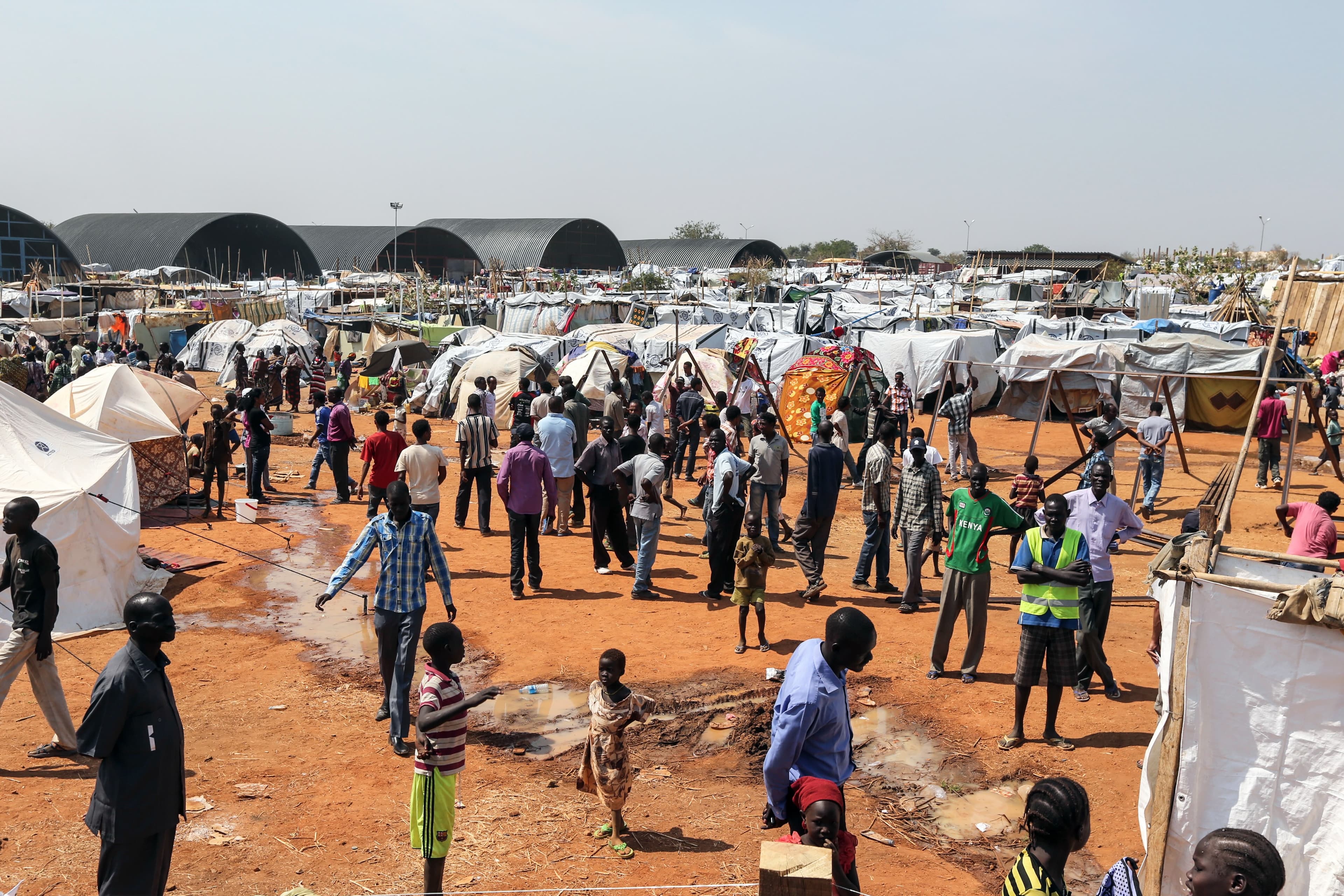
The country approaches the elections promised for December 2026 — the first in its history — without a census, without a permanent constitution and with a decapitated opposition, amid a humanitarian crisis carrying localized famine risk, 2.5 million internally displaced and the spillover of Sudan's war: more than 650,000 refugees hosted and an oil economy broken by that conflict. Ugandan troops prop up Kiir, while the UN, AU and IGAD warn of the greatest risk of a return to civil war since 2018.
The political crisis between President Salva Kiir and First Vice President Riek Machar remains the core driver of instability. Machar has been detained since March 26, 2025 and, together with seven co-accused, faces charges of treason, murder and crimes against humanity before the Special Court on the Incident of Nasir, over the March 2025 uprising in which Lieutenant General Majur Dak was killed. The trial, opened in September 2025, was still ongoing in July 2026 at the defence stage: as of July 19, 2026 (97th session) the court ordered the remaining accused to continue their defence through oral testimony. Machar's faction has declared the 2018 peace agreement 'abrogated', and its core provisions — army unification, a permanent constitution and elections — remain unimplemented. The government has set the country's first general elections for December 22, 2026, and on July 1, 2026 parliament approved amendments removing the census and permanent-constitution prerequisites; the Council of Political Parties warned of a shortfall close to 60% of its operational budget, and the opposition argues that voting without implementing the accord would push the country 'toward greater chaos'.
Figures on the affected population, each with its source and date.
Internally displaced
OCHA, citado por Global Centre for the Responsibility to Protect · July 2026
Refugees / cross-border displaced
UNHCR, citado por Global Centre for the Responsibility to Protect (refugiados sursudaneses en países vecinos) · July 2026
Population facing acute food insecurity (IPC 3+, estimate)
IPC South Sudan Acute Food Insecurity Projection Update, abril-julio 2026 (Fase 3+) · April 2026
Estimated fatalities
OHCHR (muertes documentadas por conflicto armado y violencia intercomunal, enero-septiembre 2025; citado en HRW World Report 2026) · September 2025
Who faces whom.
Every actor with what they control and what they are after, and the ties of support and hostility that bind them to the rest. The camps are not assigned by hand: they come from the alliances and enmities recorded in the profile.
Around Government / SSPDF (Kiir)
Around SPLA-IO (Machar-aligned)
Around Government / SSPDF (Kiir)
Around SPLA-IO (Machar-aligned)
No declared alignment
Circle size shows relative influence; the blue arc, the share of territory under control. Camps are computed from the alliances and enmities declared in each profile.
No severity index: the CSI is a dated measurement and we publish it only where there is weekly monitoring. The profile explains the conflict through context, actors and sources.
Timeline
The events that changed the course of the conflict, in order and with their source.
This section will be populated with historical phases
Phase Title - Pending Development
Placeholder text for timeline context
Actors: Key actors to be identified Consequences: Consequences to be documented
Concrete signals the editorial team monitors to anticipate phase changes.
Machar trial verdict
StableA conviction could reignite large-scale violence or definitively fragment the armed opposition.
Viability of the December elections
WorseningNo census, no permanent constitution and a 60% electoral budget shortfall: high risk of polls without legitimacy.
Akobo/Jonglei front
WorseningTowns changing hands and mass displacement; the thermometer of a return to open war.
Famine-risk pockets
WorseningNasir, Ulang, Nyirol and Akobo in the IPC worst case; humanitarian access will define the outcome.
Coverage level
Open conflict · as of Jul 22, 2026
An open conflict we analyse but do not follow day to day. This profile gathers the context, actors and sources verified up to the cut-off date, and publishes no severity index: we do not add new events or recalculate the CSI unless the conflict escalates and we reactivate it. We say so plainly so you know what you are reading.
Last reviewed: Jul 22, 2026.
We publish how complete each profile is. These are the points of our editorial policy that can be checked against the data on file.
7 of 8 checks
- Conflict summary writtenDone
- Timeline with 10 dated events or morePending
- Conflict actors on fileDone
- Conflict status assignedDone
- 8 sources cited or moreDone
- Every published figure with its source and dateDone
- Geolocation on fileDone
- Historical and political context writtenDone
Four further policy points — per-claim verification and traceability, naming review and cross-review — are checked by hand and are not part of this count.
Methodology pending: This profile is in initial development. As research is completed, full documentation of data sources, analysis methods, and information limitations will be provided.
Key sources
- IPC — South Sudan: Acute Food Insecurity Projection Update for April - July 2026
- Global Centre for the Responsibility to Protect — South Sudan - Populations of Concern
- Human Rights Watch — World Report 2026: South Sudan
- International Crisis Group — A Trial for South Sudan's Frail Peace
- One Citizen Daily — Court orders accused persons to continue oral defence
- Infobae / EFE — La falta de fondos y de Constitución ensombrece las primeras elecciones de Sudán del Sur
- UNHCR — South Sudan - Operational Data Portal (refugiados acogidos)
- ACLED — Sudán del Sur
- UNMISS — Sudán del Sur
- International Crisis Group — Sudán del Sur
- Human Rights Watch — Sudán del Sur
- Amnesty International — Sudán del Sur
- UN OCHA — Sudán del Sur
- UNHCR — Sudán del Sur
- Comisión de Derechos Humanos de la ONU — Sudán del Sur
- IPC — Sudán del Sur
- WFP — Sudán del Sur
- IOM DTM — Sudán del Sur
IAW monitors this conflict as part of its structured early warning and analysis of East Africa.
International Affairs Watch
- Next under weekly monitoringNigeriaArmed Insurgency and Terrorist Violence in NigeriaActive monitoring · review overdueWatchingJihadist capability in urban centers
- Same region · East AfricaSomaliaHumanitarian Emergency and Security Crisis in SomaliaOpen conflict · as of Jul 22, 2026WatchingAUSSOM funding