Overview
A combined crisis of jihadist insurgency, state fragility and climate emergency running since the state's collapse in 1991. Al-Shabaab, an Al Qaeda affiliate, controls broad rural areas of the center-south and has sustained a counteroffensive since 2025 that reversed much of the government's 2022-2023 gains, while in Puntland an Islamic State affiliate resists the siege of regional forces backed by the US and UAE.
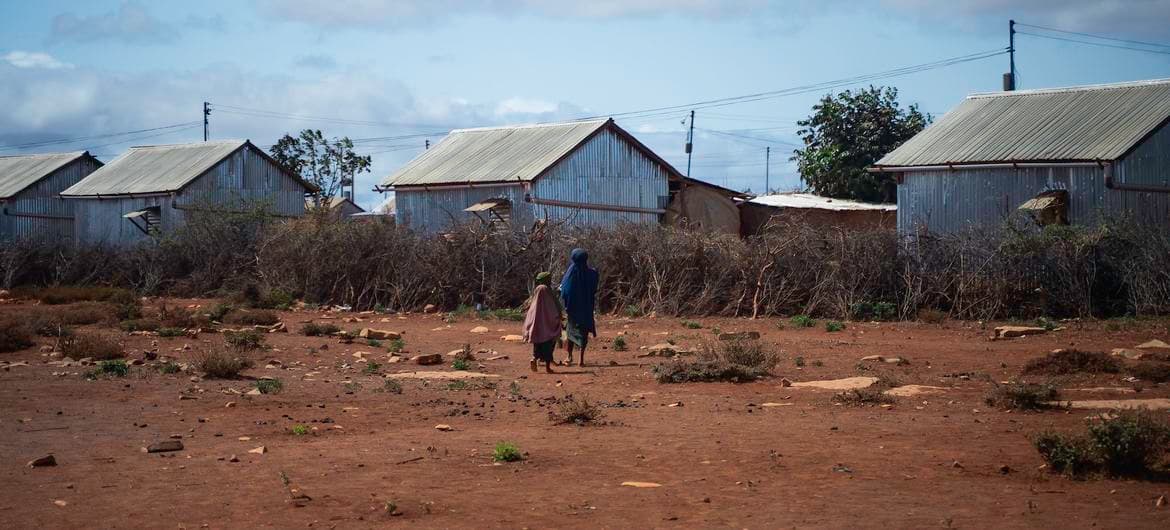
The federal state, propped up by the African Union mission (AUSSOM, successor to ATMIS) and the US air campaign, also faces a constitutional crisis: the extension of President Hassan Sheikh Mohamud's term and the postponement of the 2026 elections escalated into armed clashes in Mogadishu between government forces and opposition-aligned militias, with Puntland and Jubaland disowning the central government. Recurrent drought and defunded aid — with 6.5 million people acutely food insecure and 3.4 million displaced — complete one of the world's most protracted humanitarian crises, while AUSSOM's future hangs on a structural funding shortfall.
Military dynamics: al-Shabaab retains the initiative gained through its counteroffensive launched in February 2025, which recovered most of the territory it had lost since 2022 in Middle Shabelle — including Adan Yabaal in April 2025 — and allowed it to pressure Hiiraan and the approaches to Mogadishu. In response, the Somali National Army launched Operation Badr in March 2026 alongside AUSSOM, retaking Hawaadley (Middle Shabelle, announced 11 March 2026) and the towns of Daarusalaam and Mubarak in Lower Shabelle. The group's attacks on army and AUSSOM bases continued through the second quarter, and the US maintains its air campaign: AFRICOM conducted a strike against al-Shabaab near Jamame (60 km northeast of Kismayo) on 4 July 2026. In Puntland, regional forces — some 3,000 troops deployed since January 2025 under Operation Hillaac, with US and Emirati air support — continue tightening the noose on ISIS-Somalia in the Cal Miskaad mountains; the group is in retreat but retains harassment capacity.
Figures on the affected population, each with its source and date.
Internally displaced
UNHCR Somalia Operational Data Portal · March 2026
Refugees / cross-border displaced
UNHCR Horn of Africa Somalia Situation Data Portal · May 2026
Population facing acute food insecurity (IPC 3+, estimate)
IPC/FSNAU Somalia (Fase 3+, proyección feb-mar 2026) · February 2026
Who faces whom.
Every actor with what they control and what they are after, and the ties of support and hostility that bind them to the rest. The camps are not assigned by hand: they come from the alliances and enmities recorded in the profile.
Around Al-Shabaab
Around Federal Government of Somalia
Around Al-Shabaab
Around Federal Government of Somalia
Circle size shows relative influence; the blue arc, the share of territory under control. Camps are computed from the alliances and enmities declared in each profile.
No severity index: the CSI is a dated measurement and we publish it only where there is weekly monitoring. The profile explains the conflict through context, actors and sources.
Timeline
The events that changed the course of the conflict, in order and with their source.
This section will be populated with historical phases
Phase Title - Pending Development
Placeholder text for timeline context
Actors: Key actors to be identified Consequences: Consequences to be documented
Concrete signals the editorial team monitors to anticipate phase changes.
AUSSOM funding
WorseningStructural shortfall ($93.9M in arrears): early troop reductions would open gaps al-Shabaab would exploit.
Government-opposition dialogue
ImprovingResumed in July after the Mogadishu clashes; failure would reopen political violence in the capital.
Middle Shabelle and Hiiraan fronts
StableOperation Badr retook key towns, but al-Shabaab has held the strategic initiative since 2025.
Drought and food response
Stable6.5 million in Phase 3+ with defunded aid; rainfall trajectory defines the second half of 2026.
Coverage level
Open conflict · as of Jul 22, 2026
An open conflict we analyse but do not follow day to day. This profile gathers the context, actors and sources verified up to the cut-off date, and publishes no severity index: we do not add new events or recalculate the CSI unless the conflict escalates and we reactivate it. We say so plainly so you know what you are reading.
Last reviewed: Jul 22, 2026.
We publish how complete each profile is. These are the points of our editorial policy that can be checked against the data on file.
7 of 8 checks
- Conflict summary writtenDone
- Timeline with 10 dated events or morePending
- Conflict actors on fileDone
- Conflict status assignedDone
- 8 sources cited or moreDone
- Every published figure with its source and dateDone
- Geolocation on fileDone
- Historical and political context writtenDone
Four further policy points — per-claim verification and traceability, naming review and cross-review — are checked by hand and are not part of this count.
Methodology pending: This profile is in initial development. As research is completed, full documentation of data sources, analysis methods, and information limitations will be provided.
Key sources
- IPC — Somalia: Acute Food Insecurity Situation January 2026 and Projections for February-March and April-June 2026
- UNHCR — Somalia Operational Data Portal - Internal Displacement
- UNHCR — Horn of Africa Somalia Situation - Regional Refugee Data
- Critical Threats Project (AEI) — Shootout in Mogadishu; Africa File, June 11, 2026
- Al Jazeera — Why Mogadishu clashes are deepening Somalia's political crisis again
- IPI Global Observatory — With AUSSOM's Funding Challenges Here to Stay, What Are the Options for the Mission's Future in Somalia?
- U.S. AFRICOM — U.S. Forces Conduct Strike Targeting al-Shabaab (Jamame, 4 July 2026)
- Al Jazeera — More than 6 million Somalis face hunger amid climate shocks and conflict
- ACLED — Somalia
- UN OCHA — Somalia
- International Crisis Group — Somalia
- Human Rights Watch — Somalia
- UNHCR — Somalia
- IPC — Somalia
- FEWS NET — Somalia
- WFP — Somalia
- UNICEF — Somalia
- IOM DTM — Somalia
- ReliefWeb — Somalia
IAW monitors this conflict as part of its structured early warning and analysis of East Africa.
International Affairs Watch