Overview
Civil war between the Sudanese Armed Forces (SAF), led by General Abdel Fattah al-Burhan, and the Rapid Support Forces (RSF) of General Mohamed Hamdan Dagalo ("Hemedti"), which began on 15 April 2023 in Khartoum after the collapse of the post-Bashir transition and the dispute over integrating the RSF into the regular army. The conflict is rooted in the parallel security architecture built under Omar al-Bashir's regime, in which the RSF — heirs to Darfur's Janjaweed militias — grew into an alternative army with its own economic base.
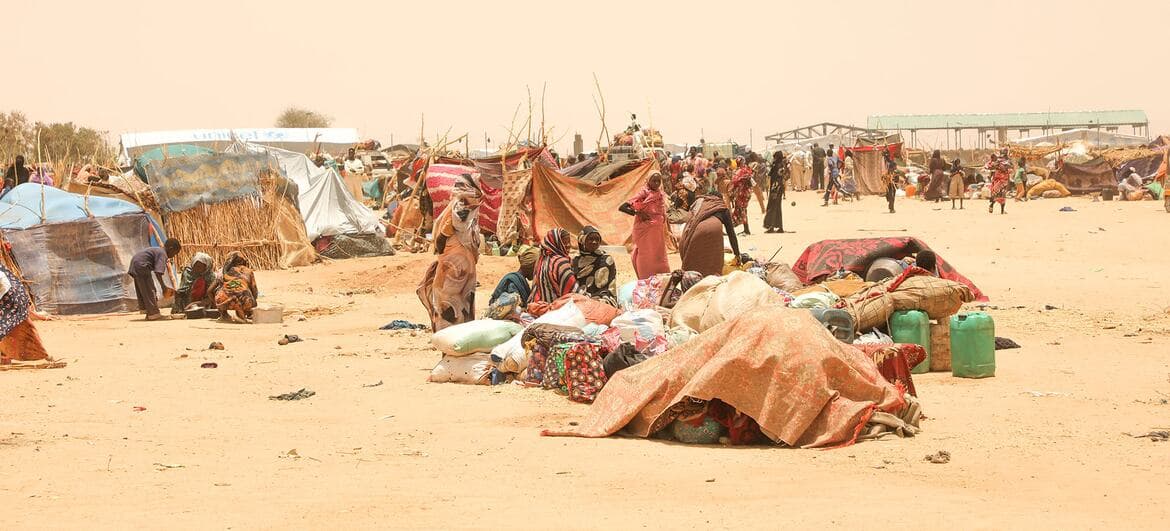
The war split the country in two: the RSF consolidated control of virtually all of Darfur — with the fall of El Fasher in October 2025, which a UN mission found bore 'hallmarks of genocide' — and projects power over Kordofan, while the SAF holds the center, north and east, including Khartoum, retaken in March 2025. With death estimates ranging from 150,000 to 400,000, some 9 million internally displaced and more than 4 million refugees, it is the world's largest humanitarian crisis. Both sides receive external backing — the UAE accused of arming the RSF; Egypt, Iran and Russia linked to the SAF — and mediation efforts by the Quad (US, Egypt, Saudi Arabia, UAE) have so far failed to produce an effective ceasefire.
As of mid-July 2026, the war between the Sudanese Armed Forces (SAF) and the Rapid Support Forces (RSF) enters its fourth year with the main front shifted to Kordofan. The RSF controls virtually all of Darfur after the fall of El Fasher in October 2025 — an assault a UN mission found bore 'hallmarks of genocide' — while the army holds the center, north and east of the country, including Khartoum, retaken in March 2025. The current focal point is the RSF siege of El Obeid, capital of North Kordofan, where some 500,000 people (including over 100,000 IDPs) are trapped under a sustained drone campaign against power, water and hospital infrastructure; the Security Council warned on 20 June 2026 of an imminent risk of mass atrocities, and observers fear a repeat of El Fasher.
Figures on the affected population, each with its source and date.
Internally displaced
UN OCHA / WFP-FAO-UNICEF · May 2026
Refugees / cross-border displaced
UNHCR (ACNUR) · February 2026
Population facing acute food insecurity (IPC 3+, estimate)
IPC (WFP/FAO/UNICEF) · May 2026
Who faces whom.
Every actor with what they control and what they are after, and the ties of support and hostility that bind them to the rest. The camps are not assigned by hand: they come from the alliances and enmities recorded in the profile.
Around Sudanese Armed Forces (SAF)
Around Rapid Support Forces (RSF)
Around Sudanese Armed Forces (SAF)
Around Rapid Support Forces (RSF)
No declared alignment
Circle size shows relative influence; the blue arc, the share of territory under control. Camps are computed from the alliances and enmities declared in each profile.
Timeline
The events that changed the course of the conflict, in order and with their source.
2019 — 2023–present
End of 30-year rule
Fall of Bashir
Mass protests force Omar al-Bashir out. Military assumes power briefly before a fragile civilian-military power-sharing agreement.
Actors: Protest movement, SAF, RSF, Transitional Military Council, Forces for Freedom and Change (FFC). Consequences: Transitional government formed; RSF and SAF remain dominant. Reform stalled.Civilian-military tensions
Transitional failure
Power-sharing between civilians and military fails to demobilize or integrate paramilitary forces. Economic crisis deepens.
Actors: Transitional government, SAF (Burhan), RSF (Hemedti), FFC, regional mediators. Consequences: October 2021 coup; Burhan and Hemedti consolidate. Civilian component marginalized.Competition over integration and resources
SAF–RSF power struggle
Disagreement over timeline and form of RSF integration into army. Both sides arm and position for conflict.
Actors: SAF (Burhan), RSF (Hemedti), UAE, Egypt, Russia (Wagner legacy), Sudan’s political parties. Consequences: No durable political solution. Escalation toward open war.Fighting in Khartoum and beyond
Outbreak of civil war
Clashes in Khartoum and other cities. RSF and SAF fight for control of the state. Civilian infrastructure targeted.
Actors: SAF, RSF, civilian population, militias, foreign backers. Consequences: Mass displacement, humanitarian collapse, ethnic violence in Darfur.Spillover and external involvement
Regionalization of the conflict
Refugees and armed flows into Chad, South Sudan, Ethiopia. Regional states and international actors take sides or mediate.
Actors: Chad, South Sudan, Ethiopia, Egypt, UAE, AU, UN, humanitarian agencies. Consequences: Prolonged conflict, state collapse, regional destabilization.
Concrete signals the editorial team monitors to anticipate phase changes.
Siege of El Obeid
WorseningAn RSF assault on North Kordofan's capital would replicate the El Fasher atrocity pattern over 500,000 trapped civilians.
Quad truce track
StableSAF acceptance of the 90-day truce the RSF already endorsed; the precondition of RSF withdrawal currently blocks it.
Drone war on infrastructure
WorseningDrones cause over 80% of 2026 civilian deaths; their growing reach threatens power and water far from the frontlines.
Famine risk (lean season)
WorseningIPC: 135,000 people in Phase 5 with famine reclassification risk between June and September in Darfur and South Kordofan.
Coverage level
Active monitoring · review overdue
This profile is reviewed every week. New events are added to the timeline with their source, and the severity assessment is recalculated on the stated cadence.
Last reviewed: Jul 22, 2026.
This profile's review is overdue against the frequency we state (14 days of grace). We show it rather than hold up a promise we did not keep.
We publish how complete each profile is. These are the points of our editorial policy that can be checked against the data on file.
7 of 8 checks
- Conflict summary writtenDone
- Timeline with 10 dated events or morePending
- Conflict actors on fileDone
- Conflict status assignedDone
- 8 sources cited or moreDone
- Every published figure with its source and dateDone
- Geolocation on fileDone
- Historical and political context writtenDone
Four further policy points — per-claim verification and traceability, naming review and cross-review — are checked by hand and are not part of this count.
Our analysis is based on open sources and structured assessment. Language is clear and non-academic where possible.
Key sources
- Al Jazeera — El-Obeid under siege by RSF: Could this be Sudan's next el-Fasher?
- Sudan Tribune — RSF accepts truce but rejects withdrawal in response to U.S. Sudan peace plan
- Security Council Report — Sudan: Briefing and Consultations (What's In Blue)
- WFP/FAO/UNICEF — Risk of Famine persists as nearly 19.5 million people face acute food insecurity in Sudan
- UN News (UNHCR) — Sudan crisis: UN agency launches $1.6 billion appeal to support refugees in seven countries
- Infobae / EFE — Mueren 18 personas en dos bombardeos con drones de los paramilitares en el sur de Sudán
- Radio Dabanga — The tragedy of the Sudan war as reflected in the numbers for 2025
- ACLED — Sudán
- UN OCHA — Sudán
- International Crisis Group — Sudán
- Human Rights Watch — Sudán
- Amnesty International — Sudán
- UNHCR — Sudan Emergency
- IPC — Sudán
- IOM DTM — Sudán
- OHCHR — Sudán
- Comité de Sanciones 1591 del Consejo de Seguridad — Sudán
- CFR Global Conflict Tracker — Sudán
IAW monitors Sudan as a critical case of state collapse, prolonged armed conflict, and humanitarian emergency with systemic regional implications.
International Affairs Watch