IAWDigital investigation
Who Has Wings?The New Aerial Order
Drones have become a key weapon in today’s armed conflicts. Where do they strike, who can use them, and what does it cost?
Research: Ezequiel Emanuele and Valentina Benta · International Affairs Watch · Script as of 12 November 2026
01 · The sky has changed
Drones have become a key weapon in today’s armed conflicts.
From the front in Ukraine to the civil war in Sudan, from Iran’s attacks on the Gulf states to the May 2025 crisis between India and Pakistan, they are changing the way wars are fought.
Three factors explain their spread. They are cheap, they can be manufactured in large numbers and they are increasingly easy to obtain. By 2024, more than 40 states were operating large armed drones, and about half had acquired them in barely three years. Nor are they any longer a weapon exclusive to states: armed groups such as the Houthis in Yemen and the Rapid Support Forces in Sudan now use them too. In 2023 alone, ACLED recorded the use of drones in conflicts in at least 34 countries.
Today they watch, locate the enemy, attack, saturate defences, jam communications and even carry supplies to the front. Their spread forces a rethink of defence.
Sources: FT · AP · Stimson Center · Drone Wars UK · ACLED · CSIS
02 · The spread
Every dot is a recorded air event.
Each event groups every strike on the same day, in the same place and between the same pair of actors, according to ACLED. The dots cover May 2024 to October 2025. Size indicates reported deaths.
113,000+drone strikes · Ukraine and Russia
Russia–Ukraine: the war in which drones became the central weapon
Between 24 February 2022 and 6 November 2026, ACLED recorded more than 113,000 drone strikes in Ukraine and Russia. That is four out of every five air strikes of the war.
Sources: ACLED, Ukraine Conflict Monitor, datos al 6-nov-2026
670,000drones lost each month by Ukraine, according to NATO
The quantities are enormous on both sides. In 2022, Russia was launching a few dozen long-range drones a month; by November 2025 the figure exceeded 5,000. Ukraine loses some 670,000 drones a month, according to NATO data. And by early 2026, drones were causing three out of every four casualties of the war, according to the Financial Times.
Sources: Financial Times, 21-ene y 6-jul-2026
3 bridgesover the Dnipro, in a single week
They also reach ever further. Aircraft strike mostly near the front, but drones reach the west of the country. In October 2026, Russian jet-powered drones hit three bridges over the Dnipro in a single week. Two of the eight bridges that connect Kyiv were hit.
Sources: ACLED · Financial Times, 10-oct-2026
40,000+drone strikes on Russian territory
On the Russian side of the border, ACLED recorded more than 40,000 drone strikes. In May 2026, Ukraine launched its largest bombardment of Moscow since the start of the war, and its drones now reach targets as far as the Urals. It also attacks the routes supplying Russian troops in southern Ukraine. In the second quarter of 2026 it did so almost every day, and nine out of ten of those attacks were carried out with drones, according to ACLED.
And those drones, from both sides, do not always stay in Ukraine.
Sources: ACLED · Financial Times, 28-may-2026
80+events in Eastern Europe · January–August 2026
The war in Ukraine advances on Europe
With drones, the war in Ukraine has become a problem for its neighbours. Between January and August 2026, ACLED recorded more than 80 events involving drones or drone debris in Eastern European countries. And they arrive from both sides. Russian drones come down in Romania, Bulgaria and Moldova when they attack Ukrainian ports, while Ukrainian drones stray towards the Baltic states and Finland when they aim at Russia’s Baltic ports.
Sources: ACLED, 25-ago-2026
4 minutesGalați, Romania · 29 May 2026
In the early hours of 29 May 2026, a Geran-2 drone crashed into a building in Galați, in south-eastern Romania. According to ACLED, more than 70 people had to be evacuated and a woman and a child were injured. Although two F-16 fighter aircraft and a helicopter were scrambled, they did not manage to shoot it down in the four minutes the drone spent in Romanian airspace, according to the Romanian army. F-16s are designed to shoot down aircraft, not small, slow drones flying low. The margin of time was minimal, and shooting it down near border towns put civilians at risk. Added to that, according to ACLED, are NATO rules that limit Romania’s ability to act on the border.
Sources: ACLED, 29-may-2026
17incursions into Moldova in 2026
Moldova, which is not a member of NATO, is the most defenceless. Russian drones or drone-carried missiles entered its territory at least 17 times in 2026, and the country has no means of shooting them down. Bulgaria, by contrast, is hit from both sides. A Ukrainian decoy drone crashed near a key gas pipeline in Dobrich province, and in early August a Russian reconnaissance drone appeared on its southern coast. Nor is the problem new. In September 2025, a wave of Russian drones had already entered Poland.
Sources: ACLED, 25-ago y 29-may-2026
Leipzig4 August 2026
But not all of them are stray drones. On the night of 4 August 2026, an employee at Leipzig airport, in Germany, found a drone carrying military-grade explosives beside a Ukrainian cargo aircraft. According to German prosecutors, the aim was to cause an explosion. Investigators believe it did not happen because the detonator failed. A month later, the German government attributed the attack to “persons acting on behalf of Russian government agencies”. Vladimir Putin replied that the evidence had been “planted”.
Sources: Financial Times, 5-ago y 1-sep-2026
Sudan: a civil war in which both sides fight with drones brought in from abroad
The war in Sudan began on 15 April 2023 as a power struggle between the army and the Rapid Support Forces (RSF). At first, the army used its ageing air force defensively. In its third year, it has become a conflict dominated by drones, according to ACLED.
Sources: AP, 15-jun-2026 · ACLED, 4-jun-2026
The armyIranian, Turkish and Turkish-Pakistani drones
The army uses Iranian drones (Mohajer-6 and Ababil-3), Turkish-Pakistani drones (YIHA-III) and Turkish drones (Bayraktar). Since the war in Iran it has depended above all on Turkey and on a Pakistani channel facilitated by Saudi Arabia, although, according to reports, Saudi Arabia halted that arrangement in April 2026.
Sources: ACLED, 4-jun-2026
The RSFChinese equipment via Libya and Chad
The RSF have received mostly Chinese equipment since late 2024, through Libya and Chad, via a network backed by the United Arab Emirates, according to ACLED. With it they moved from basic loitering munitions to CH-95 strategic drones. Faced with interruptions, the Emirates are reported to have opened routes through Ethiopia and the Central African Republic. Since mid-2025, Ukrainian, Spanish and Colombian operators have been embedded in their units, probably in charge of the drones.
Sources: ACLED, 4-jun-2026
13% · 2.3%drones intercepted by the army and by the RSF
Air defences are uneven. Over the past year, the army intercepted about 13% of the RSF’s drones, and the RSF barely 2.3% of the army’s.
Past year. Source: ACLED, 4 Jun 2026.IAWInternational Affairs Watch
Sources: ACLED, 4-jun-2026
The Gulf: Iran’s response with drones
In late February 2026, when the United States and Israel began bombing Iran, one of their targets was its ballistic-missile launchers, large and easy to detect from the air. Tehran responded above all with drones. Their launchers escape detection from the air, and production is believed to be spread across several sites, easier to conceal than missile factories.
Sources: Financial Times, 5-mar-2026 · ACLED, 24-jun-2026
1,000+drones against the Emirates up to 5 March
Within days, Iran launched drones against five Gulf countries: the United Arab Emirates, Qatar, Bahrain, Kuwait and Saudi Arabia. More than a thousand were launched against the Emirates alone up to 5 March. Several were aimed at United States facilities. In Kuwait, an attack on a US command centre killed six soldiers, according to the Financial Times.
Sources: Financial Times, 5-mar-2026
USD 30,000 – 35,000estimated cost of a Shahed
The arithmetic is simple. A Shahed costs between 30,000 and 35,000 dollars, according to estimates, while the most effective missiles for shooting it down, such as the Patriot or the IRIS-T, cost between a few hundred thousand and a few million dollars each. And Tehran has many of them. Israeli intelligence estimates that it holds more than 10,000, and an analyst at the Royal United Services Institute speaks of “tens of thousands”. In addition, the newest versions are said to have an Iranian satellite-navigation system, called Nasir, designed to resist jamming.
Sources: Financial Times, 5-mar y 22-oct-2026
200Ukrainian experts in the region, according to Zelensky
The Gulf war also intersected with the war in Ukraine. According to Zelensky, some 200 Ukrainian experts travelled to the region and destroyed Shaheds launched by Iran against United States and Israeli targets.
Sources: Financial Times, 20-abr-2026
Yemen: an armed group with drones of its own
In Yemen, the Houthis show that an armed group can also have its own air force. They have manufactured drones on a large scale since about 2018, with technology transferred by Iran. They use two types. On the one hand, long-range, single-use drones such as the Sammad, which explode against the target. On the other, drones that drop explosives and return to base to be used again, such as the Rujum or DJI Mavics, adapted from Chinese civilian models.
Sources: ACLED, 6-ago-2024
1,000+Houthi drone events · 2016 – June 2024
From their first attack, in September 2016, to June 2024, ACLED recorded more than 1,000 Houthi drone events, which caused more than 700 deaths. At first they attacked only inside Yemen. From 2018 they also targeted airports and oil companies in Saudi Arabia and the Emirates. One of the best-known cases was the September 2019 attack on the Saudi Aramco facilities at Abqaiq and Khurais. According to ACLED, it was a joint attack by the Houthis and Iran, and it temporarily took almost 5% of the world’s oil out of service.
Sources: ACLED, 6-ago-2024
2,600 kmto Tel Aviv · July 2024
With the war in Gaza, the Houthis changed targets. Between November 2023 and June 2024, more than half of their drone attacks were aimed outside the country, against Israel and against commercial ships and United States and United Kingdom warships in the Red Sea. In July 2024, one of their drones flew for some 16 hours and more than 2,600 kilometres to Tel Aviv, where it killed one person.
And in July 2026 the truce with Saudi Arabia broke down and the Houthis resumed their attacks.
Sources: ACLED, 6-ago-2024 y 23-oct-2026
03 · Who has wings?
Who has drones, how they obtained them and where the parts come from
Before: a small club
24countries with armed drones in 2020
In 2020, armed drones were still in the hands of a few: 24 countries had them, against some 80 with unarmed drones, according to the researcher Michael J. Boyle. Sellers were few as well. The United States and Israel dominated exports; China offered its Wing Loong for between 1 and 2 million dollars, no questions asked, and Turkey was only beginning to look for buyers.
24 with armed dronesabout 80 with unarmed dronesIAWInternational Affairs Watch
Sources: Michael J. Boyle, The Drone Age, OUP, 2020
Step 1 · Buying
Bayraktar TB2Turkey · Sudan
Since then, the club has opened up and new sellers have appeared. Turkey, which in 2020 was only beginning to look for buyers for its drones, today also equips the Sudanese army with its Bayraktars.
And its drones can end up facing each other. On 23 May 2026, a Bayraktar Akinci of the Sudanese Armed Forces shot down another Akinci with an air-to-air missile. According to the government of Sudan, the intercepted aircraft had entered from Ethiopia and belonged to its air force, although that attribution has not been independently verified.
Sources: Stimson Center, 10-dic-2025 · ACLED, 4-jun-2026 · ThePrint, 24-may-2026
Step 2 · Licence and copy
Shahed → GeranIran · Russia
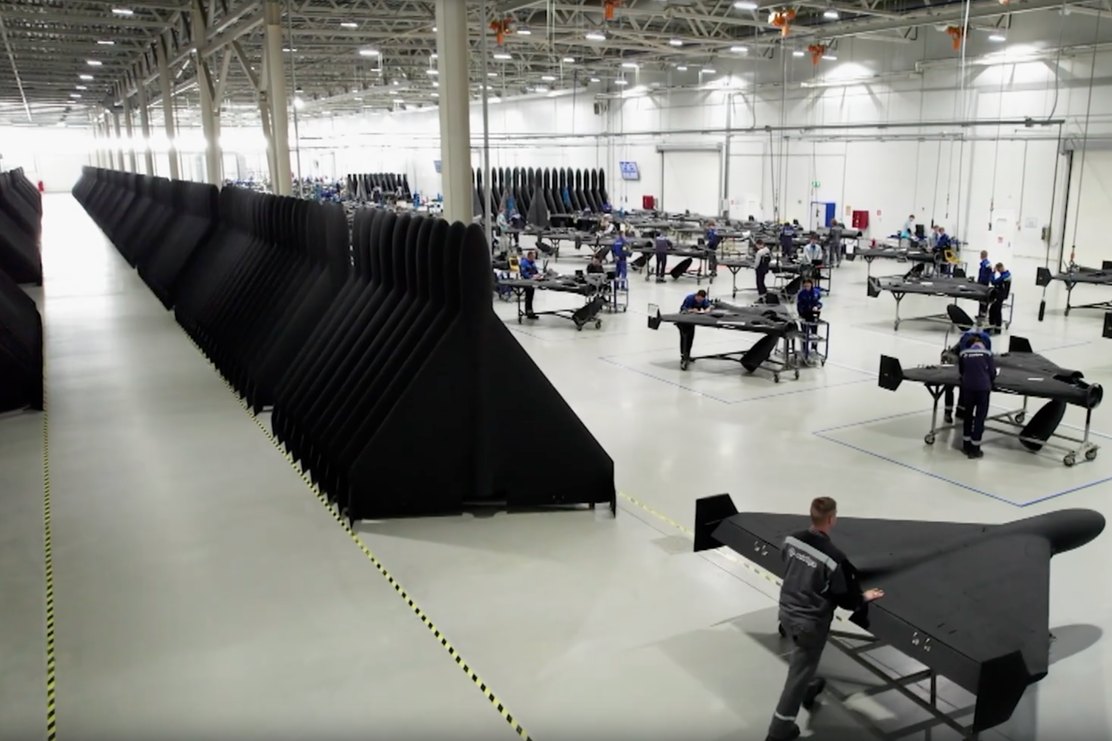
The Shahed is an Iranian design. The Houthis first used it in 2019 against Saudi Arabia. In 2022, Russia received the first Iranian Shaheds, which it calls Geran, and shortly afterwards signed a 1.75-billion-dollar agreement to manufacture them under licence at Alabuga.
Sources: CSIS, 4-sep-2026
The copiesLUCAS · Feilong-300D
Since 2023 it has also produced them at Izhevsk, and it has gradually replaced Iranian parts with Russian and Chinese ones. Others copied it. The United States first used its LUCAS in the war with Iran, and in 2024 China presented its own version, the Feilong-300D.
Sources: CSIS, 4-sep-2026
Back to IranRussian-made Geran-2s
And now the route is reversed. According to CSIS, Iran is reported to have used Russian-made Geran-2s against the Emirates and, according to Western officials, asked Moscow for more advanced versions.
Sources: CSIS, 13-abr-2026 · Financial Times, 13-sep-2026
Step 2b · The Geran evolves
77% → 97%monthly Geran shoot-down rate · February–May 2024
And the Geran keeps changing. Ukraine learned to shoot it down. Its monthly Geran shoot-down rate rose from 77% in February 2024 to 97% in May, according to CSIS, and by March 2026 interceptor drones were already accounting for 70% of shoot-downs in the Kyiv region, according to the head of the Ukrainian army.
Sources: CSIS, 4-sep-2026 · Financial Times, 20-abr-2026
600 km/hGeran-5
Russia responded with more speed. First it added a jet engine with the Geran-3, which flies at twice the speed of the Geran-2. And in 2026 it changed its structure. The Geran-4 reinforces the original shape, and the Geran-5 resembles a cruise missile and flies at 600 km/h. Ukraine intercepts around 60% of jet-powered drones, against 90 or 95% of the earlier ones, according to its air force.
According to the Ukrainian air force. Source: Financial Times, 13 Sep 2026.IAWInternational Affairs Watch
Sources: CSIS, 4-sep-2026 · Financial Times, 13-sep-2026
Step 3 · The cheap route
Cheap and many
Step 3 · FPVs and cheap drones
Near the front, the key is that they be cheap and numerous.
The Russian Molniya was born in volunteer workshops and, according to CSIS, went into series production with state funding. It reportedly costs between 300 and 5,000 dollars, against some 50,000 for the Lancet, a drone with similar functions. In September 2025, Russia launched some 2,200 Molniya-2s and some 400 Lancets. On the other side, Ukraine builds its FPVs, small drones piloted through a camera. And the logic extends beyond the war. Taiwan already produces 15,000 drones a month and wants to multiply that figure by seven by 2030.
Sources: CSIS, 13-abr-2026 · Financial Times, 21-ene y 22-jul-2026
Russia, September 2025: each dot stands for 20 drones launched
Molniya-2
some 2,200 launched
USD 300 – 5,000 per unit, reportedly
Lancet
some 400 launched
some USD 50,000 per unit
Step 4 · The commercial drone
The shortest route is to buy a civilian drone.
China manufactures between 70 and 80% of the world’s commercial drones, according to the consultancy Drone Industry Insights. Armed groups such as the Houthis buy them and adapt them to drop explosives.
Sources: Financial Times, 21-ene-2026 · ACLED, 6-ago-2024
Step 5 · The drone taken apart
But whatever the route, almost all depend on the same parts.
The war depends on international supply chains that blur the line between those who fight and those who claim to stay out of it.
China supplies both sides.
China supplies both Ukraine and Russia, from drone components to engines and manufacturing systems. American companies, in turn, provide key technology for Russian drones.
Sources: Financial Times, 21-ene-2026 · CSIS, 4-sep y 13-abr-2026
- Ukrainian FPVAbout 85% of the partsChina
- Russian drones shot down in 2025Chinese parts, narrowly ahead of American onesChina · United States
- Geran (some versions)Copy of a German engine, antennas and jet enginesChina
- GarpiyaManufacture coordinated from IzhevskFactories in China
- Russian dronesMore than half of the artificial-intelligence componentsUS companies, via China and Hong Kong
Step 6 · How they innovate
This race is not necessarily won by whoever has the most advanced drone.
According to CSIS, the advantage depends increasingly on being able to improve a weapon again and again in combat.
The Geran is the best example. Technically, it was born as a rudimentary weapon, but Russia changes it constantly. Improvements begin as improvised fixes, are tested at the front and, if they work, go into series production.
Its two factories, Alabuga and Izhevsk, sometimes arrive at different solutions to the same problem. And between the factory and the front, weeks pass. A Geran shot down on 15 October 2025 carried a satellite receiver that had been installed on 8 October.
The same happens on the other side. Yehor Dudinov, director of Falcons, a Ukrainian manufacturer of interceptor drones, says they have to be improved day by day with what soldiers report, because a drone bought in bulk and stored may be useless six months later. Turkey has a similar advantage. According to a senior NATO official, it can test its prototypes almost without obstacles. The United States, by contrast, is not organised to compete at that pace, according to CSIS.
Sources: CSIS, 4-sep-2026 · Financial Times, 30-sep-2025 y 22-oct-2026
04 · The cost of the sky
One 2-million-dollar missile, or dozens of drones.
Attacking
Attacking with drones is cheap.
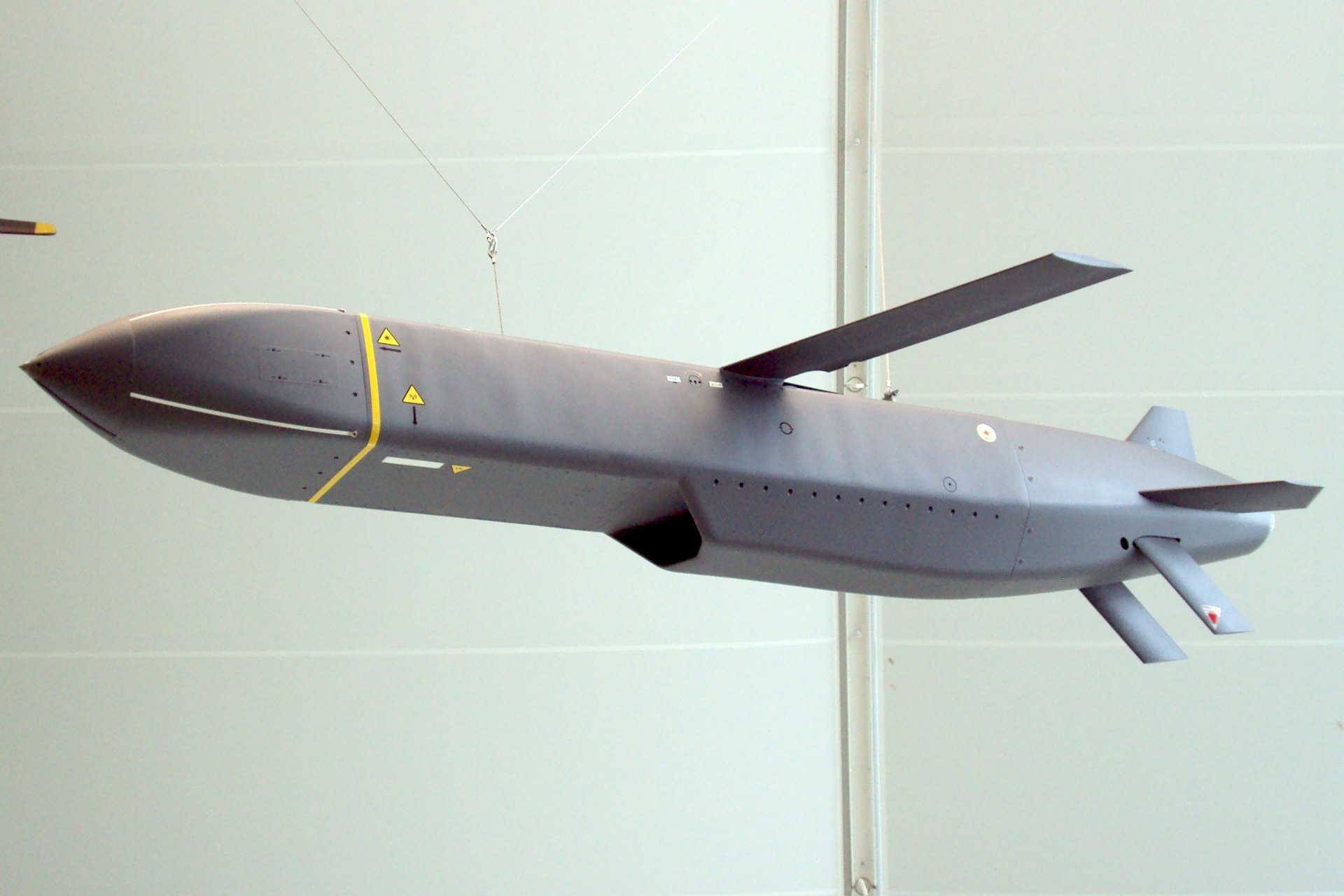
A Russian Molniya reportedly costs between 300 and 5,000 dollars. A Shahed, between 30,000 and 35,000, according to estimates. The drones with which Ukraine attacks Russian logistics in the south cost less than 50,000 dollars, while a Storm Shadow cruise missile costs some 2 million. That is why, according to ACLED, Ukraine can strike almost daily at targets it used to hit with cruise missiles, which were too expensive to use frequently. And although the new jet-powered Gerans are more expensive than their predecessors, they still cost less than the Kalibr or Kh-101 cruise missiles Russia used before.
The difference lies not only in the price of each weapon, but in what that price makes possible. For the cost of a single Storm Shadow missile one can pay for at least 40 of the drones Ukraine uses against Russian logistics, or between 57 and 66 Shaheds. A missile is a single blow. With drones, the same budget is enough to attack every day, repeat the attack if it fails and try new targets. That is why, more than the damage of each attack, what drones change is how many times one can attack.
Sources: CSIS, 13-abr-2026 · Financial Times, 5-mar y 13-sep-2026 · ACLED, 30-jul-2026
The cost of attacking
For the price of one missile
1 Storm Shadow
some USD 2 million
=
at least 40 drones
at less than USD 50,000 each
The cost of defending
The problem of air defence is economic.
Shooting down a drone can cost far more than producing it. While a Shahed costs some 30,000 dollars, the most effective missiles for defending against it, such as the Patriot PAC-3 or the IRIS-T, cost from hundreds of thousands to several million dollars. An AIM-9X used by the NASAMS system costs more than a million.
Sources: Financial Times, 22-oct-2026, 30-sep-2025 y 20-abr-2026
The cost of defending
21 dronesPoland · September 2025
In September 2025, when 21 Russian drones entered Poland, NATO sent F-35s to shoot down four of them with expensive air-to-air missiles.
Sources: Financial Times, 30-sep-2025
That is why cheaper alternatives are appearing.
Interceptor drones, cannons, machine guns and electronic jamming. A Ukrainian Sting costs some 2,100 dollars, according to its manufacturer, and Turkey says its Korkut gun can shoot down a Shahed for less than 10,000 dollars. These defences have limits, however: against the new jet-powered Gerans, Ukraine still has to resort to its F-16s, according to Zelensky.
The strategy is to combine defences: use cheap systems to stop most attacks and keep the most expensive missiles and aircraft for the targets that get through.
Sources: Financial Times, 22-oct-2026 y 20-abr-2026
Beyond price
Drones can achieve their purpose even when they are intercepted.
In the Red Sea, international forces shot down 75% of the Houthi drones aimed at ships, against 16% of the missiles. Even so, the drones forced the deployment of defences and the expenditure of interceptors. According to ACLED, the Houthis use them to threaten shipping and wear down defences at relatively low cost.
Iran applies a similar logic with its Shaheds. Besides causing damage, they seek to saturate defences and exhaust stocks of interceptors.
And expensive defences run out. In October 2026, Ukraine had a critically low reserve of Patriot missiles, according to the Financial Times. The attacker can thus lose most of its drones and still come out ahead, while the defender can shoot down almost everything and still run out of missiles.
The challenge lies in the cost gap between cheap attack weapons and expensive defence systems.
Sources: ACLED, 6-ago-2024 · Financial Times, 5-mar y 10-oct-2026 · Stimson Center, 20-mar-2026
05 · The new aerial order
Where they strike, who can do it and what it costs.
The findings of this section await the new ACLED data extraction and will be published as an update to this investigation.
Limits and method
ACLED groups into a single event every strike on the same day, in the same place and between the same pair of actors, so that one event may correspond to many munitions, and deaths are the most conservative figure reported. Drone type is not a column in the database: it appears only in the notes for each event. The dots on the map correspond to the extraction covering May 2024 to October 2025; the figures in the text come from the sources cited in each section, with ACLED data as of 6 November 2026 in the case of Ukraine and Russia.
Several figures come from parties to the conflicts (governments, armed forces, intelligence services) or from companies with a commercial interest: in each case they are presented with attribution. Data on production, stocks and costs are estimates; no global database records them, and prices are cited without harmonisation. The equivalence calculations between missiles and drones are IAW’s own, based on estimated unit prices.
Sources
- Charles Clover, Langley, Cook and Miller, “Russia, Ukraine and the race for Chinese drone components”, Financial Times, 21 Jan 2026.
- AP, “Drone strikes kill over 1,000 civilians in Sudan in first 5 months of 2026, UN rights chief says”, 15 Jun 2026.
- Charles Clover, “Iran turns to cheap drones as US and Israel target missile launchers”, Financial Times, 5 Mar 2026.
- Stimson Center, “Drone Warfare in South Asia”, 10 Dec 2025.
- Chris Cole, “Proliferation of armed drones continues apace resulting in numerous civilian casualties”, Drone Wars UK, 13 Feb 2024.
- Luca Nevola and Valentin d’Hauthuille, “Six Houthi drone warfare strategies: How innovation is shifting the regional balance of power”, ACLED, 6 Aug 2024.
- Nohad Eltayeb and Ali Mahmoud Ali, “How has Sudan’s drone war adapted to shifting supply lines?”, ACLED, 4 Jun 2026.
- Fabrice Deprez, “Ukraine’s drone pilots hit Russian targets from 500km away”, Financial Times, 20 Apr 2026.
- Kateryna Bondar, “How Russia Is Building a Sovereign Drone Ecosystem for AI-Driven Autonomy”, CSIS, 13 Apr 2026.
- John Paul Rathbone and Fabrice Deprez, “Turkey markets $10,000 drone defence”, Financial Times, 22 Oct 2026.
- ACLED, Ukraine Conflict Monitor, data from 24 Feb 2022 to 6 Nov 2026, accessed 11 Nov 2026.
- Charles Clover and Sylvia Pfeifer, “Cost, speed and scale: How drone warfare is rewiring west’s arms production”, Financial Times, 6 Jul 2026.
- Christopher Miller, “Russia targets Ukraine’s bridges as Vladimir Putin expands air war”, Financial Times, 10 Oct 2026.
- Christopher Miller and Max Seddon, “Ukraine is turning the tables”, Financial Times, 28 May 2026.
- ACLED, “Ukraine’s drone campaign is dismantling Russia’s military supply network in the occupied south”, 30 Jul 2026.
- ACLED, “As drone attacks on Ukraine intensify, Eastern Europe is straining to counter the spillover”, 25 Aug 2026.
- Cristian Vlas, “What does Russia’s drone hit mean for Romania and NATO?”, ACLED, 29 May 2026.
- Sam Jones and Aysun Bora, “Drone carrying explosives found at Leipzig airport, say German police”, Financial Times, 5 Aug 2026; “Explosive drone at German airport raises ‘hybrid threat’ alarm”, Financial Times, Aug 2026; Anne-Sylvaine Chassany, “Germany blames Russia for Leipzig drone attack”, Financial Times, 1 Sep 2026.
- ACLED, “How does ACLED code air- and drone strike events?”, 24 Jun 2026.
- Ameneh Mehvar, “Escalating Houthi attacks disrupt Saudi aviation and increase risks to energy exports”, ACLED, 23 Oct 2026.
- Michael J. Boyle, The Drone Age: How Drone Technology Will Change War and Peace, ch. “The New Race”, Oxford University Press, 2020.
- Akshat Mohan, “Are drones from Turkey fighting each other in Sudan’s proxy civil war?”, ThePrint, 24 May 2026.
- Kateryna Bondar and Nicole Errera, “From Shahed to Geran: How Russia Continues to Reinvent the One-Way Attack Drone”, CSIS, 4 Sep 2026.
- Max Seddon and Fabrice Deprez, “How Russia’s new drones are changing the air war”, Financial Times, 13 Sep 2026.
- “Taiwan’s drone ambitions play to its tech manufacturing strengths”, Financial Times, 22 Jul 2026.
- Ben Hall, Charles Clover and Laura Pitel, “Military briefing: Ukraine races to intercept Russian drones”, Financial Times, 30 Sep 2025.
- Stimson Center, analysis on air defence (Kelly Grieco), 20 Mar 2026.
- ACLED, event data, sub-event type “Air/drone strike”, all countries, 4 May 2024 to 27 Oct 2025, extracted 27 Oct 2026 (dots on the map). Deaths: most conservative reported figure.
By Ezequiel Emanuele and Valentina Benta · International Affairs Watch
IAWInternational Affairs Watch
Research: Ezequiel Emanuele and Valentina Benta. Script as of 12 November 2026. Map: Armed Conflict Location & Event Data (ACLED), acleddata.com, air and drone strikes from 4 May 2024 to 27 October 2025, extracted 27 October 2026; an ACLED event is not a strike. Figures in the text come from the sources cited in each section. Cartography: Mapbox, OpenStreetMap. Published 12 November 2026.