Overview
A strategic dispute over the status of Taiwan, which China deems an inalienable part of its territory whose 'reunification' — by force if necessary — it defines as a historic mission, while the island has governed itself as a democracy since the 1990s. Since 2022, and more intensely after Lai Ching-te took office (2024), Beijing has normalized 'gray-zone' military pressure: daily air incursions, encirclement exercises, permanent coast guard patrols and hybrid operations against submarine cables and infrastructure.
The balance rests on US deterrence — anchored in the Taiwan Relations Act and 'strategic ambiguity' — now strained by the Trump administration's trade agenda with Beijing, and on Taiwan's own resilience, constrained by deadlock between the DPP executive and an opposition-controlled legislature that trims defense budgets. The central risk analysts monitor is not an imminent invasion but the incremental normalization of Chinese military presence around the island, which shortens warning times for a potential quarantine or blockade.
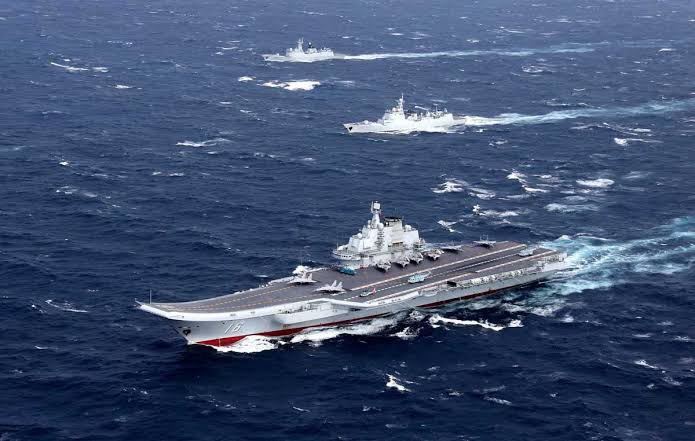
Chinese military pressure on Taiwan continues in a pattern of sustained gray-zone coercion, though with a notable modulation in the air domain: the PLA conducted 134 incursions into Taiwan's air defense identification zone (ADIZ) in June 2026, well below the 300-plus monthly entries recorded after Lai Ching-te's May 2024 inauguration, including 12 days with no incursions. Analysts (AEI, July 2, 2026) read the decline as a tactical repositioning rather than de-escalation, because Beijing simultaneously intensified naval and paramilitary presence: the carrier Fujian transited the Strait on June 23 (its third transit since commissioning in November 2025), the China Coast Guard has maintained continuous patrols east of Taiwan's EEZ since June 1 — with vessel rotations on July 4 that switched off AIS transponders — and multiplied entries into restricted waters off Kinmen (June 3, 16, 18, 29) and Pratas (June 5, 19, 27), assessed as rehearsals of quarantine or blockade capabilities. On July 4 the PLA ran a combat-readiness joint patrol with more than 22 aircraft including H-6 bombers, and on July 20 a PLA helicopter crossed the median line and operated in the R9 restricted zone east of it for the first time, which Taiwan's Institute for National Defense and Security Research described as two new gray-zone tactical patterns introduced in a single day.
Short of open war, the cost is measured in military pressure, warning time and resilience.
ADIZ incursions (Jun 2026)
Well below the 300+ monthly of 2024-2025; read as tactical repositioning, not détente.
Continuous CCG patrol streak
Uninterrupted presence east of Taiwan's EEZ since June 1, with transponders off during rotations.
Special defense budget
Passed in May through 2033; 38% below the government's request.
Stalled US arms package
The largest sale to Taiwan ever, stalled after the May Trump-Xi meeting.
Who faces whom.
Every actor with what they control and what they are after, and the ties of support and hostility that bind them to the rest. The camps are not assigned by hand: they come from the alliances and enmities recorded in the profile.
Around Taiwan (ROC)
Around China (PLA)
Around Taiwan (ROC)
Around China (PLA)
No declared alignment
Circle size shows relative influence; the blue arc, the share of territory under control. Camps are computed from the alliances and enmities declared in each profile.
No severity index: the CSI is a dated measurement and we publish it only where there is weekly monitoring. The profile explains the conflict through context, actors and sources.
Timeline
The events that changed the course of the conflict, in order and with their source.
2016-2020 — 2024-present
Pro-independence Tsai presidency; China military exercises escalate
Democratic Taiwan under Tsai; Beijing Pressure Increases
Tsai elected on pro-independence platform in 2016. Beijing viewed her as threat to "One China." PLA conducted large-scale military exercises around Taiwan. Cross-strait relations deteriorated.
Actors: Taiwan government (DPP), China (PRC military), United States, opposition parties (KMT) Consequences: Increased military expenditure by both sides; US arms sales to Taiwan; more frequent PLA exercisesTaiwan praised for pandemic response; China criticism increases
COVID-19 and Geopolitical Competition Intensification
Taiwan praised internationally for COVID-19 handling. Biden administration signaled stronger support for Taiwan. China increased political pressure and military exercises.
Actors: Taiwan military (ROCAF), PLA Air Force, US Pacific Command, Japanese Self-Defense Forces Consequences: Record PLA sorties around Taiwan; Taiwan defense budget at record levels; US military presence increasedUkraine invasion parallels Taiwan concerns; military exercises surge
Ukraine Crisis Impact and Military Escalation
Russia's Ukraine invasion reinforced Taiwan security concerns. China conducted major military exercises around Taiwan. US strengthened Taiwan Strait transits.
Actors: Taiwan, China (PLA), United States, NATO allies, Japan, Australia, regional QUAD members Consequences: Record military exercises by PLA (2500+ PLA sorties in 2024); defensive weapons sales to TaiwanRecord exercises; Biden Taiwan commitment; China frustration
Heightened Tensions and Military Posturing
PLA conducted unprecedented exercises simulating Taiwan blockade (Wuxi exercises, 2024). President Biden repeatedly affirmed US defense commitment to Taiwan.
Actors: Taiwan government, PLA, US military, Japan (JSDF), Australia, regional allies Consequences: Unprecedented military exercises; Taiwan defense readiness at peak; economic concerns about conflict; global supply chain risks
Concrete signals the editorial team monitors to anticipate phase changes.
Maritime quarantine rehearsals
WorseningContinuous coast guard patrols and entries into Kinmen/Pratas waters rehearse blockade capabilities without declaring one.
New median-line patterns
WorseningA PLA helicopter's crossing into the R9 zone (July 20) added another precedent of incremental normalization.
Release of the US arms package
StableUS$14bn pending after Trump-Xi: its release (or cancellation) will gauge the firmness of US deterrence.
Undersea infrastructure
StableFurther cable damage (Matsu No. 3) would gauge the hybrid campaign to isolate outlying islands.
Coverage level
Open conflict · as of Jul 22, 2026
An open conflict we analyse but do not follow day to day. This profile gathers the context, actors and sources verified up to the cut-off date, and publishes no severity index: we do not add new events or recalculate the CSI unless the conflict escalates and we reactivate it. We say so plainly so you know what you are reading.
Last reviewed: Jul 22, 2026.
We publish how complete each profile is. These are the points of our editorial policy that can be checked against the data on file.
6 of 8 checks
- Conflict summary writtenDone
- Timeline with 10 dated events or morePending
- Conflict actors on fileDone
- Conflict status assignedDone
- 8 sources cited or moreDone
- Every published figure with its source and datePending
- Geolocation on fileDone
- Historical and political context writtenDone
Four further policy points — per-claim verification and traceability, naming review and cross-review — are checked by hand and are not part of this count.
Data derives from US intelligence sources, Taiwan defense reports, regional think tank analyses. Military exercise numbers based on verified 2024 data. Scenarios are expert assessments of geopolitical risks.
Key sources
- American Enterprise Institute — China & Taiwan Update, July 2, 2026
- American Enterprise Institute — China & Taiwan Update, July 10, 2026
- Taipei Times — PLA helicopter crosses median line in new 'gray zone' tactic, analyst says
- Taipei Times — Legislature passes defense budget bill
- Taipei Times — Chinese vessel suspected of damaging undersea cables
- USNI News — Taiwan Mobilizes HIMARS, Anti-ship Missiles For Major Defense Drill
- Infobae — Bloqueo, sabotaje e invasión: así se prepara Taiwán para hacer frente a una eventual guerra con China
- CFR Global Conflict Tracker — Taiwán
- CSIS China Power Project — Taiwán
- Carnegie Endowment — Taiwán
- Brookings Institution — Taiwán
- IISS — The Military Balance
- Global Taiwan Institute
- INDSR — Taiwán
- Mainland Affairs Council — Taiwán
- Ministerio de Defensa Nacional — Taiwán
- Ministerio de Relaciones Exteriores — Taiwán
- Departamento de Estado de EE. UU. — Taiwán
Taiwan Strait tension represents one of the world's most critical geopolitical risks. With unprecedented PLA military exercises, a democratic Taiwan committed to sovereignty, and ambiguous yet persistent US commitment, the potential for conflict is real. Military conflict would devastate the global economy given Taiwan's semiconductor dependence.
International Affairs Watch
- Next under weekly monitoringHaitiState Collapse, Gang Violence and Institutional Breakdown in HaitiActive monitoring · review overdueWatchingGSF deployment
- Same region · East AsiaSouth China SeaTerritorial Disputes in the South China SeaOpen conflict · as of Jul 22, 2026WatchingSierra Madre resupply missions