Overview
A civil war unleashed by the military coup of 1 February 2021, which toppled Aung San Suu Kyi's elected government and turned civic resistance into armed insurgency. The junta (Tatmadaw) faces a constellation of People's Defence Forces aligned with the National Unity Government and the historic ethnic armies — KIA, KNU, AA, TNLA, MNDAA, among the 1,200-plus armed groups ACLED registers — in the world's most fragmented conflict and Asia's deadliest, with more than 100,000 dead since the coup.
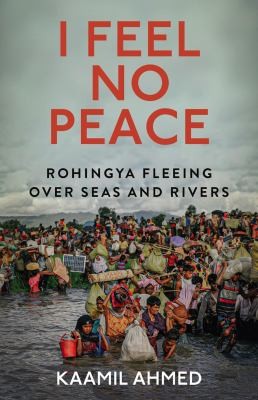
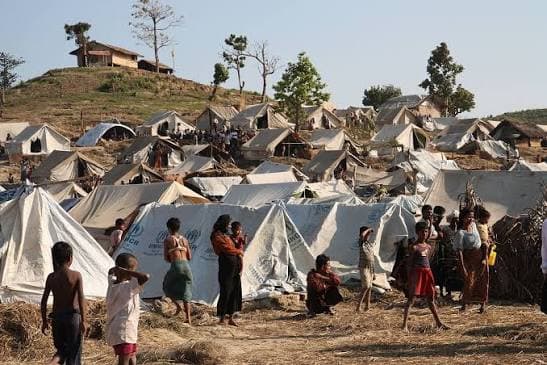
After losing vast territory in 2023-2024, the junta regained ground through mass conscription, drones, airpower and Chinese backing, and staged an electoral 'transition' (December 2025-January 2026) that installed Min Aung Hlaing as president with the opposition banned. Rakhine is the major exception: the Arakan Army controls nearly the entire state and besieges Kyaukphyu, China's strategic enclave. With 3.8 million internally displaced, 1.2 million Rohingya refugees in Bangladesh and more than 12 million people facing acute hunger, the war has no negotiated exit in sight, with China as the dominant arbiter and international attention receding.
As of July 2026, Myanmar's military junta has consolidated a partial territorial recovery after two dry seasons of counteroffensives built on some 100,000 conscripts inducted since 2024, drones, unchallenged airpower and Chinese material backing. The regime controls the main urban centers and has reopened key trade corridors: the Mandalay-China border highway in northern Shan State (after the MNDAA returned Lashio in April 2025 and the TNLA withdrew from several towns under Beijing-brokered ceasefires), the Ayeyarwady River corridor through Sagaing toward Bhamo (Kachin), the Chin towns of Falam, Tedim and Tonzang, and the Asia Highway from Hpa-an to Myawaddy (Karen State). The resistance — KIA, KNU, Karenni and Chin forces, and NUG-aligned PDFs — retains broad rural and peripheral zones but is under mounting pressure; ACLED describes this as the world's most fragmented conflict, with over 1,200 registered armed groups. The Brotherhood Alliance's fracture was exposed in March 2026 when the MNDAA seized Kutkai from the TNLA (March 14-20) before a bilateral ceasefire, with Beijing warning other groups against intervening.
Figures on the affected population, each with its source and date.
Internally displaced
UNHCR Operational Data Portal – Myanmar situation · June 2026
Refugees / cross-border displaced
UNHCR Operational Data Portal – Myanmar situation (refugiados y solicitantes de asilo en países vecinos) · May 2026
Population facing acute food insecurity (IPC 3+, estimate)
WFP – proyección de hambre aguda para 2026 · December 2025
Estimated fatalities
ACLED (vía AFP/The Irrawaddy; muertes por el conflicto desde el golpe de 2021) · July 2026
Who faces whom.
Every actor with what they control and what they are after, and the ties of support and hostility that bind them to the rest. The camps are not assigned by hand: they come from the alliances and enmities recorded in the profile.
Around Military junta (Tatmadaw)
Around Arakan Army (AA)
Around Military junta (Tatmadaw)
Around Arakan Army (AA)
No declared alignment
Circle size shows relative influence; the blue arc, the share of territory under control. Camps are computed from the alliances and enmities declared in each profile.
The severity index is published only on profiles under weekly monitoring: it is a dated measurement and we do not display it where we do not recalculate it.
Timeline
The events that changed the course of the conflict, in order and with their source.
2021-02-01 — 2024-06-01
General Min Aung Hlaing seizes power, declares election fraud
Military Coup d'État
Myanmar's military annuls results of November 2020 elections won by Aung San Suu Kyi's NLD party. Military claims widespread voting irregularities despite international observers confirming election integrity.
Actors: Myanmar Tatmadaw, National League for Democracy (NLD), civil society Consequences: Mass civil disobedience campaign, arrest of political leadership, initial military crackdowns killing hundreds, collapse of state institutionsCivil movement transitions to armed insurgency, PDF established
Spring Revolution & Armed Resistance Formation
Protesters escalate tactics after military's lethal response. Remnants of NLD government coalesce into National Unity Government in exile. Military's increasingly brutal crackdowns provoke armed retaliation. People's Defence Force emerges as coordinated resistance movement.
Actors: PDF, NUG, ethnic armed organizations, student unions, Buddhist monks Consequences: Expansion of conflict to Mandalay, Yangon, and regional states; ethnic EAOs begin coordination with PDF; international humanitarian concerns escalateMajor offensive by northern ethnic armed groups transforms conflict dynamics
Operation 1027 & Breakthrough Coordination
Three major ethnic armed organizations (Arakan Army, Myanmar National Democratic Alliance Army, Ta'ang National Liberation Army) launch coordinated Operation 1027, capturing significant military outposts. Demonstrates unprecedented unity among armed resistance forces. Military suffers largest losses since 2021 coup.
Actors: Arakan Army, MNDAA, Ta'ang NLA, PDF, Tatmadaw Consequences: Military loses control of several strategic towns in Shan State; thousands of soldiers defect or captured; international mediation attempts increase; humanitarian access further restrictedMilitary retains control of major cities but loses ground in countryside
Continued Territorial Instability & Regional Fragmentation
By mid-2024, resistance forces control significant portions of border regions and countryside. Military maintains stronghold in Naypyidaw, Yangon, and Mandalay but faces constant attacks. No clear path to military victory; protracted conflict expected to continue for years.
Actors: PDF, all major EAOs, Tatmadaw, ASEAN nations, regional powers Consequences: Humanitarian catastrophe deepens; 17+ million food insecure; 1.5 million internally displaced; regional destabilization spreads; economic collapse worsens
Concrete signals the editorial team monitors to anticipate phase changes.
Battle for Kyaukphyu
StableThe siege of the Chinese enclave defines both Rakhine's future and Beijing's level of intervention.
Next dry season
StableThe junta is preparing new counteroffensives; their reach will gauge whether territorial recovery continues or stalls.
Resistance cohesion
WorseningThe MNDAA-TNLA fracture showed the power of China-forced ceasefires; further ruptures would weaken the anti-junta front.
ICJ ruling and ICC warrant
StableRulings expected within months; they could revive international pressure on a normalizing junta.
Coverage level
Periodic review · review overdue
This profile is reviewed once a month: the situation overview and figures are updated if they changed. Between reviews there may be relevant events not yet incorporated. We do not publish a severity index: the CSI requires the weekly monitoring this profile does not have.
Last reviewed: Jul 22, 2026.
This profile's review is overdue against the frequency we state (45 days of grace). We show it rather than hold up a promise we did not keep.
We publish how complete each profile is. These are the points of our editorial policy that can be checked against the data on file.
7 of 8 checks
- Conflict summary writtenDone
- Timeline with 10 dated events or morePending
- Conflict actors on fileDone
- Conflict status assignedDone
- 8 sources cited or moreDone
- Every published figure with its source and dateDone
- Geolocation on fileDone
- Historical and political context writtenDone
Four further policy points — per-claim verification and traceability, naming review and cross-review — are checked by hand and are not part of this count.
Myanmar data is compiled from multiple verified sources including ACLED, UNOCHA, UNHCR, ICG reports, and local news source monitoring. Casualty estimates reflect documented data and are conservative, acknowledging that actual figures are likely higher.
Key sources
- International Crisis Group — Myanmar's New Administration: Military Consolidation, Not Transition
- The Irrawaddy (AFP) — Myanmar Mourns as Post-Coup Conflict Death Toll Hits 100,000
- Asia Times — Crunch time looms over Myanmar's grinding civil war
- UNHCR — Myanmar situation – Operational Data Portal
- World Food Programme — WFP warns that Myanmar faces rising displacement and unacceptable hunger levels in 2026
- La Jornada — La junta militar de Myanmar formaliza su poder: el general Min Aung Hlaing asume la presidencia
- UN OCHA — Myanmar Humanitarian Update No. 52
- ACLED — Myanmar
- International Crisis Group — Myanmar
- Human Rights Watch — Myanmar
- Amnesty International — Myanmar
- UN OCHA — Myanmar
- UNHCR — Myanmar
- OHCHR — Myanmar
- IIMM — Myanmar
- Relator Especial de la ONU — Myanmar
- ReliefWeb — Myanmar
Myanmar's civil war represents Southeast Asia's most destabilizing conflict, with implications for regional security, migration flows, and economic stability. Without credible political transition, the fragmented conflict appears destined to persist, deepening a humanitarian catastrophe that has already displaced millions.
International Affairs Watch