Overview
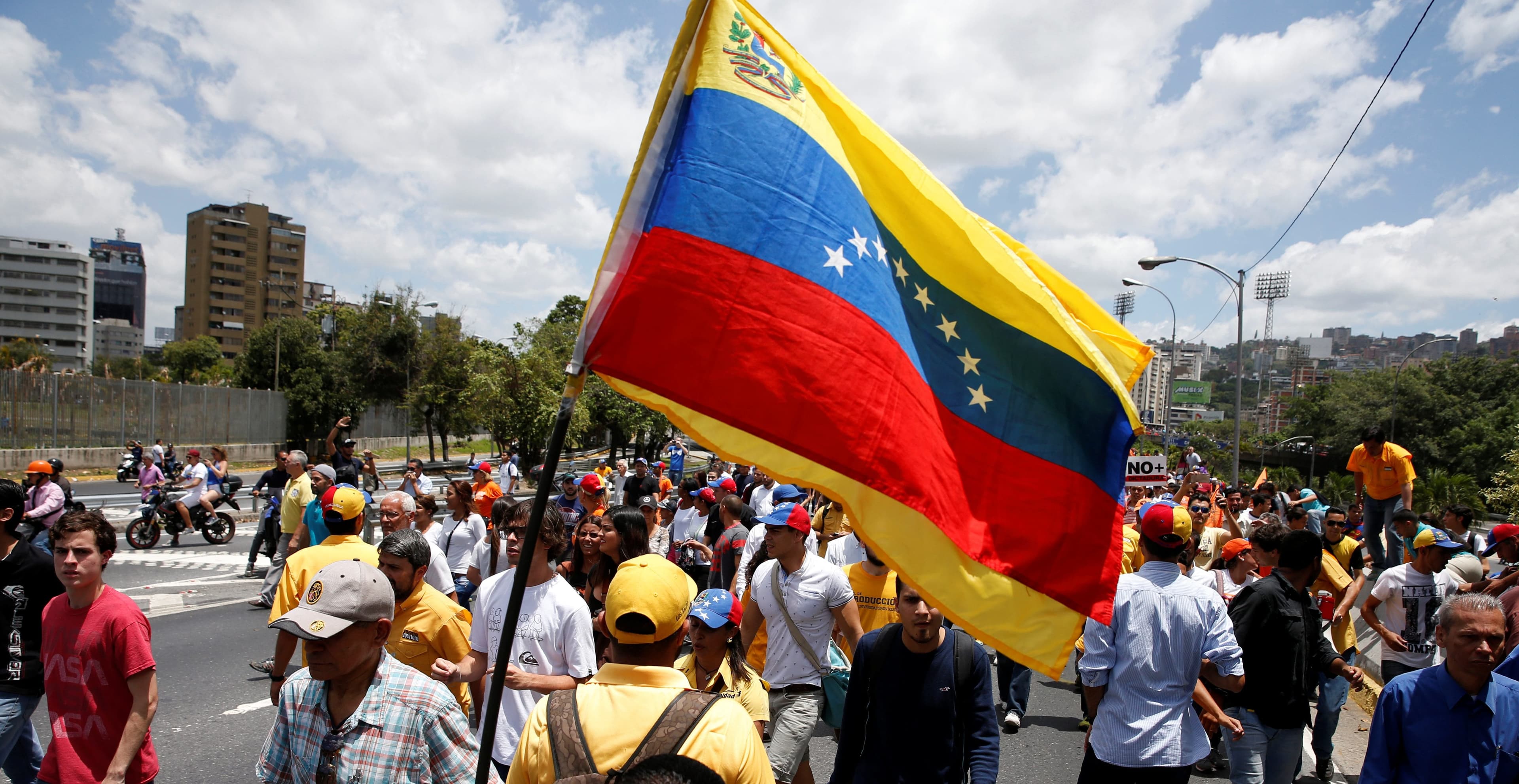
A political, institutional and humanitarian crisis running since the 2010s: economic collapse, Chavista authoritarianism under Nicolás Maduro, contested elections (including the July 2024 presidential vote, whose victory the opposition of María Corina Machado and Edmundo González claimed with published tally sheets) and the hemisphere's largest migration crisis, with some 7.6 million Venezuelans abroad.
The conflict changed nature between 2025 and 2026: the US military pressure campaign in the Caribbean (strikes on vessels, naval deployment, covert operations) was followed, on January 3, 2026, by Operation 'Absolute Resolve': strikes on military targets and the capture of Maduro, now prosecuted for narco-terrorism in New York. Chavismo retained power through Delcy Rodríguez's caretaker presidency — whose constitutional term expired in July 2026 without elections being called — in an open-ended scenario shaped by negotiation with Washington, a divided opposition, partial lifting of oil sanctions and reconstruction after the June 2026 earthquakes.
The conflict changed nature drastically between late 2025 and early 2026. After months of escalation — a US military buildup in the southern Caribbean from August 2025, strikes on vessels labeled as drug boats, seizures of sanctioned tankers and covert operations — in the early hours of January 3, 2026 the United States executed Operation 'Absolute Resolve': some 150 aircraft bombed military targets across northern Venezuela (La Guaira, Higuerote, Caracas) for about thirty minutes while special operations forces assaulted Fort Tiuna and captured Nicolás Maduro and his wife Cilia Flores, who were flown to New York. Reports indicate 23-47 Venezuelan soldiers killed, 32 Cuban military personnel (confirmed by Havana) and 2 civilians. On January 5, 2026 Maduro was arraigned in Manhattan federal court on narco-terrorism charges and pleaded not guilty. On July 21, 2026 prosecutors and the defense proposed a June 2027 trial start, and Maduro appeared in court again on July 22.
Mass migration, seismic catastrophe and a constitutional vacuum define the crisis's cost.
Refugees / cross-border displaced
UNHCR (venezolanos desplazados fuera del país) · June 2026
Population facing acute food insecurity (IPC 3+, estimate)
January 2026
Venezuelans abroad
UNHCR, June 2026; slight decline from earlier peaks on return expectations.
June earthquake deaths
Magnitude 7.2 and 7.5 quakes of June 24, 2026; rising toll, with 12,400 injured.
Estimated earthquake damage
Roughly 6% of GDP, on infrastructure already degraded by the crisis.
Political prisoners released
February 2026 amnesty law, out of an estimated 800-plus; full implementation remains in doubt.
Who faces whom.
Every actor with what they control and what they are after, and the ties of support and hostility that bind them to the rest. The camps are not assigned by hand: they come from the alliances and enmities recorded in the profile.
Around Chavista government (D. Rodríguez)
Around United States
Around Chavista government (D. Rodríguez)
Around United States
No declared alignment
Circle size shows relative influence; the blue arc, the share of territory under control. Camps are computed from the alliances and enmities declared in each profile.
The severity index is published only on profiles under weekly monitoring: it is a dated measurement and we do not display it where we do not recalculate it.
Timeline
The events that changed the course of the conflict, in order and with their source.
2018–2019 — Enero 2026 – Presente
Contested elections and divided international recognition
Legitimacy crisis and dual power standoff
Nicolás Maduro’s 2018 reelection was widely criticized due to irregularities and opposition boycotts. In January 2019, the National Assembly declared his presidency illegitimate, and Juan Guaidó proclaimed himself interim president, creating a dual power scenario with divided international recognition.
Consequences: Expanded international sanctions, financial isolation, deepening economic collapse, and acceleration of mass migration outflows.Partial stabilization without structural reform
Economic adjustment and de facto dollarization
After years of hyperinflation and economic collapse, the government relaxed price controls, allowed dollar transactions, and reduced monetary expansion. The economy showed limited stabilization but remained structurally fragile and unequal.
Consequences: Decline in extreme hyperinflation, persistent high poverty, and consolidation of a hybrid informal economic model.Contested elections and renewed sanctions
Renewed electoral crisis and legitimacy erosion
In 2024, the opposition chose to participate in elections, but fraud allegations and restrictions on opposition candidates led to strong international criticism. Some external actors recognized alternative results.
Consequences: Reimposition of sanctions, further erosion of institutional legitimacy, and rising tensions with the United States.Interdictions and regional military deployment
Maritime escalation and maximum pressure
The U.S. administration intensified its “maximum pressure” policy, linking the Venezuelan government to narcotrafficking networks. Maritime interdictions and increased military deployment in the Caribbean followed.
Consequences: Increased militarization of the crisis, heightened energy volatility, and legal debate over the use of force.External intervention and political reconfiguration
Maduro’s capture and uncertain transition
In January 2026, U.S. forces captured Nicolás Maduro in a military operation in Caracas. Delcy Rodríguez assumed as interim president amid external pressure and energy sector restructuring.
Consequences: Opening of a politically fragile transition, externally conditioned institutional realignment, and ongoing economic uncertainty.
Concrete signals the editorial team monitors to anticipate phase changes.
Constitutional vacuum
WorseningThe caretaker presidency exceeded the Art. 234 limit with no elections called; each week without definition erodes the institutional exit.
Electoral reform negotiation
StableThe Figuera-Rodríguez track on the CNE is the only active path toward a verifiable electoral timeline.
Post-earthquake reconstruction
StableDisaster management defines the caretaker government's legitimacy and the pace of sanctions relief.
Migration return flows
ImprovingThe slight decline in Venezuelans abroad could reverse if the transition stalls or reconstruction fails.
Coverage level
Periodic review · review overdue
This profile is reviewed once a month: the situation overview and figures are updated if they changed. Between reviews there may be relevant events not yet incorporated. We do not publish a severity index: the CSI requires the weekly monitoring this profile does not have.
Last reviewed: Jul 22, 2026.
This profile's review is overdue against the frequency we state (45 days of grace). We show it rather than hold up a promise we did not keep.
We publish how complete each profile is. These are the points of our editorial policy that can be checked against the data on file.
6 of 8 checks
- Conflict summary writtenDone
- Timeline with 10 dated events or morePending
- Conflict actors on fileDone
- Conflict status assignedDone
- 8 sources cited or moreDone
- Every published figure with its source and datePending
- Geolocation on fileDone
- Historical and political context writtenDone
Four further policy points — per-claim verification and traceability, naming review and cross-review — are checked by hand and are not part of this count.
Methodology pending: This profile is in initial development. As research is completed, full documentation of data sources, analysis methods, and information limitations will be provided.
Key sources
- Reuters via US News — Venezuela's Maduro, US Justice Department Propose June 2027 Trial Start
- El Heraldo — Se cumplen seis meses desde la captura de Nicolás Maduro por parte de EE. UU.: ¿cómo va la transición en Venezuela?
- Infobae — Delcy Rodríguez cumple el plazo máximo de la Presidencia encargada y expertos advierten por la legalidad de su Gobierno
- CNN en Español — Delcy Rodríguez rebasa los 100 días como presidenta encargada sin dar señales para una posible transición en Venezuela
- CNN — The US says Venezuela is changing — but one month since Maduro's capture, its people aren't so sure
- USA for UNHCR — Venezuela Crisis: Aid, Statistics and News
- Wikipedia — 2026 United States intervention in Venezuela
- ACLED — Venezuela
- International Crisis Group — Venezuela
- Human Rights Watch — Venezuela
- Amnesty International — Venezuela
- OHCHR — Venezuela
- Misión de Determinación de los Hechos de la ONU — Venezuela
- Corte Penal Internacional — Venezuela I
- UN OCHA — Venezuela
- WFP — Venezuela
- WOLA — Venezuela
- CFR Global Conflict Tracker — Venezuela
IAW monitors this conflict as part of its structured early warning and analysis of South America.
International Affairs Watch