Overview
The current phase of the conflict in the eastern Democratic Republic of the Congo began in November 2021, when M23 resumed hostilities against the FARDC after eight years of inactivity, arguing that the 2013 commitments had not been fulfilled. Since then the group has gradually rebuilt its military and territorial capacity, extended its control in North Kivu and later expanded its operations into South Kivu. Between 2022 and 2024 there were successive offensives, mass displacement and regional negotiations that failed to produce a lasting solution. The escalation continued in 2025: the AFC/M23 alliance took Goma, capital of North Kivu, on 27 January, and entered Bukavu, capital of South Kivu, on 14 February, taking control of the city on the 16th, with the support of the Rwanda Defence Force. The advance raised the risk of a wider regional confrontation. The Security Council unanimously adopted resolution 2773 on 21 February 2025, demanding a cessation of hostilities and the withdrawal of M23 and Rwandan forces from Congolese territory. Rwanda denies providing that support, and there is no judicial determination on attribution.
New diplomatic tracks opened during 2025. On one side, the DRC and Rwanda signed a preliminary peace agreement in Washington on 27 June and, on 4 December, the Washington Accords for Peace and Prosperity, which set out commitments on sovereignty, the cessation of hostilities, the disarmament of armed groups —focusing on the Democratic Forces for the Liberation of Rwanda (FDLR)— and regional security.
In addition, the Doha process, mediated by Qatar, produced the Declaration of Principles (19 July 2025) and the Doha Framework (15 November 2025) between the Congolese Government and AFC/M23. The gap between what was signed and what was implemented became evident when M23 took Uvira on 10 December 2025, less than a week after the signing in Washington. The group subsequently announced its unilateral withdrawal, at the request of the US mediators, and presented it as a gesture of confidence in the Doha process.
As of mid-November 2026 these processes continue, but they have not ended the violence. The FRN (formerly AFC/M23) retains control of large areas, while the FARDC and allied groups keep up operations in different parts of the Kivus. The expanded ceasefire verification mechanism carried out missions in Minembwe and Masisi in August and September 2026, but fighting and population displacement continue: on the night of 6–7 November the FRN launched a new offensive in Kalehe territory, South Kivu.
On 12 October 2026 the conflict acquired a new political dimension. Joseph Kabila —sentenced to death in absentia for treason and war crimes on 30 September 2025— launched the Front for the Refoundation of the Nation (FRN) in Goma, a political-military coalition that includes M23 and that he chairs, with Corneille Nangaa (former AFC leader), Bertrand Bisimwa, Freddy Kaniki and Sultani Makenga as deputies. The FRN replaces AFC/M23; according to Africanews, a June report by the UN Group of Experts had already warned of a possible restructuring of the movement, with a change of name and a central role for Kabila. For ACLED, the alliance could turn the rebellion from a mainly military threat into a broader political challenge to President Félix Tshisekedi, especially among opponents of his constitutional reform.
Current situation
Overview
As of 12 November 2026 the armed conflict remains active in the eastern DRC, mainly in the provinces of North Kivu and South Kivu, despite the ceasefire commitments and negotiation processes pursued over the past year. The Front for the Refoundation of the Nation (FRN), a political-military movement announced in October 2026 under the leadership of former president Joseph Kabila, controls Goma, Bukavu and large parts of the east. The FRN emerged from the restructuring of the Congo River Alliance (AFC), whose main military component was the March 23 Movement (M23), and seeks to broaden the political dimension of the insurgency. Corneille Nangaa and Bertrand Bisimwa, leaders of the former AFC/M23 structure, also hold leadership positions in the new movement.
North Kivu
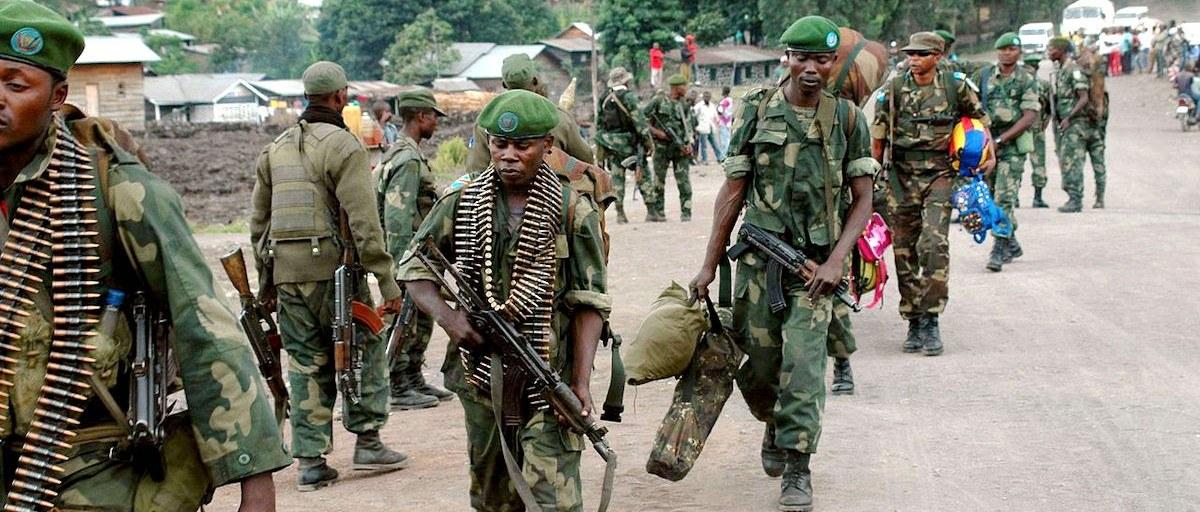
In North Kivu, fighting between the Armed Forces of the DRC (FARDC), backed by local militias known collectively as Wazalendo, and FRN fighters is concentrated mainly in Masisi and Walikale territories, according to MONUSCO's briefing to the Security Council on 29 September. In early November government forces retook several localities in Masisi, including Mirindano, Mahanga and Kilongo, after operations launched on 3 November in which at least four civilians were killed. Fighting nevertheless continued on the Kashebere–Kibati axis in Walikale territory, where the FRN still held positions. The interruption of traffic on the road linking Goma to Walikale via Nyabiondo deepens the isolation of communities and hampers the supply of essential goods.
South Kivu
In South Kivu the situation escalated again on the night of 6–7 November, when the FRN launched an offensive in Kalehe territory, in the Bunyakiri area. The fighters advanced through Kahuzi-Biega National Park and took several localities on National Road 3 (RN3), including Bitale and, on 8 November, the centre of Bulambika, after the FARDC withdrew; on the 9th there was fighting in Kambali, on the road towards Hombo. This corridor links Bukavu with Kisangani via Walikale and is a strategic route for the movement of people and goods. The army says it has halted the advance at Bulambika and is preparing a counter-offensive with the Wazalendo; local and military sources give partly differing accounts of how far the FRN has advanced. The offensive displaced some 166,500 people, according to a humanitarian alert of 9 November.
Regional dimension
This escalation adds to the persistent tension in the highlands of Walungu, Fizi and the surroundings of Uvira. The latter city, which M23 occupied in December 2025, was abandoned by the movement between 17 and 18 January 2026 and retaken by government forces on 18 January. Its border location, close to Burundi, and its strategic importance keep the risk of a regionalisation of the conflict high. Burundi continues to deploy forces in support of the Congolese government, while reports by the United Nations Group of Experts have documented Rwanda’s military backing of M23. Kigali denies supporting the movement and maintains that its intervention responds to the threat posed by the presence of the Democratic Forces for the Liberation of Rwanda (FDLR) on Congolese territory. For its part, the DRC government has been singled out for its cooperation with the FDLR and other local armed groups. These mutual accusations reflect the regional dimension of the conflict and the involvement of armed actors beyond the regular forces of both countries.
Washington process
On the diplomatic front, two complementary negotiation processes remain open, with different parties and objectives. On the one hand, the Washington Accords for Peace and Prosperity, promoted by the United States between the governments of the DRC and Rwanda, seek to reduce bilateral tensions and establish security commitments. Their main provisions include the withdrawal of Rwandan forces from Congolese territory and the neutralisation of the FDLR. On this last point disagreements persist: the Congolese government maintains that the protocol that, according to Kinshasa, it signed on 28 July 2026 with the FDLR, aimed at its disarmament, demobilisation and cantonment, constitutes progress in fulfilling its commitments; Rwanda, by contrast, considers that the initiative does not guarantee the effective neutralisation of the group and accuses Kinshasa of continuing to support it. In August the Joint Security Coordination Mechanism, made up of representatives of both countries and international facilitators, met in Geneva to advance the implementation of the Washington commitments, according to Security Council Report.
Doha process
On the other hand, the Doha Process, mediated by Qatar, brings together the Congolese government and the then AFC/M23. It rests on the Declaration of Principles signed on 19 July 2025 and on the Doha Framework for a Comprehensive Peace Agreement, signed on 15 November 2025. The latter provides for the negotiation of protocols on matters such as humanitarian access and judicial protection, the restoration of state authority, transitional security arrangements, the disarmament and demobilisation of armed groups, the return of displaced persons and refugees, economic and social recovery, and justice and reconciliation mechanisms. As of September 2026, the parties had signed only two of the planned protocols: the detainee release mechanism and the ceasefire oversight and verification mechanism. In August, representatives of the government and of AFC/M23 met in Switzerland, with the participation of Qatar, the United States, Togo, the African Union and Switzerland, to review progress and agree a roadmap for continuing the negotiations.
Ceasefire verification
To oversee compliance with the ceasefire, the Expanded Joint Verification Mechanism (EJVM+) was set in motion, with logistical support from the United Nations Organization Stabilization Mission in the DRC (MONUSCO). During August and September 2026, verification missions were carried out in Minembwe and Masisi respectively. However, the continuation of clashes shows the limitations of these mechanisms in guaranteeing an effective cessation of hostilities. On 30 October, the International Contact Group for the Great Lakes Region urged the parties to fulfil their commitments under both the Washington and Doha frameworks, and expressed its concern at the persistence of fighting and the growing use of drones. In early November, the head of MONUSCO, James Swan, visited Goma and held meetings with Joseph Kabila and other FRN leaders to address the protection of civilians, humanitarian access and ceasefire monitoring.
Humanitarian situation
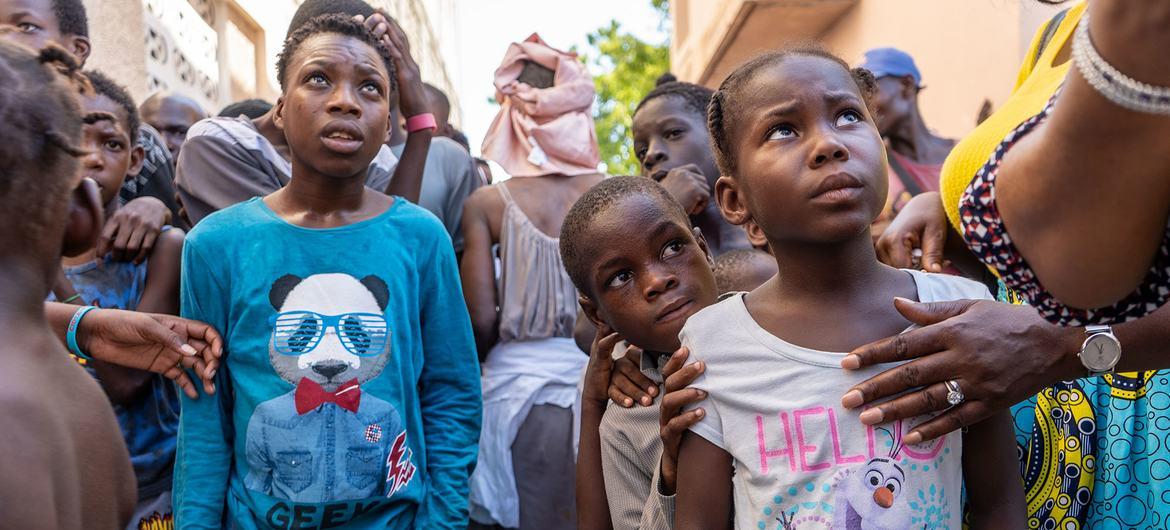
The humanitarian situation remains critical and has worsened with the new offensive in South Kivu. As of 29 September the United Nations estimated 6.1 million internally displaced people in the country, and according to the IPC analysis of 30 October 28.8 million people are in acute food insecurity between September and December 2026, including 3.6 million in Emergency. Displacement caused by the fighting is compounded by humanitarian organisations' difficulty in reaching affected areas. The alert issued on 9 November on Bunyakiri estimated that 166,500 people had recently been displaced and pointed to urgent needs for food, water, shelter, health care and protection. On top of this crisis is the Ebola outbreak caused by the Bundibugyo virus, which affects eight provinces: according to the European Centre for Disease Prevention and Control (ECDC), as of 9 November the DRC had recorded 10,990 confirmed cases and 5,354 deaths. The outbreak has also reached Kenya. Insecurity and displacement hinder access to health services and obstruct epidemiological surveillance and the response to the outbreak.
Historical and political context
The roots of the conflict go back to the 1990s and lie outside the time frame of this profile, which takes the reappearance of M23 in 2021 as its starting point. The direct antecedent is the agreement of 23 March 2009 between the Government and the National Congress for the Defence of the People (CNDP), the organisation from which the former combatants who later formed M23 came. The failure to implement the commitments made in that agreement, and the tensions surrounding the integration of former combatants into the Armed Forces of the Democratic Republic of the Congo (FARDC), form part of the immediate background to the emergence of the movement.
The persistence of violence in the east of the country nevertheless responds to a broader dynamic that goes beyond the activity of M23. The region is characterised by the presence of numerous armed groups, disputes over territorial control and tensions linked to land, citizenship and the representation of different communities. Added to this is the limited capacity of the Congolese state to exercise authority and guarantee security in a sustained manner in some areas. In this setting, various armed groups have managed to consolidate forms of territorial control and authority structures of their own, at times in direct competition with state institutions.
The conflict also has a marked regional dimension. Tensions between the DRC and Rwanda are shaped by the latter’s security concerns regarding the presence of the Democratic Forces for the Liberation of Rwanda (FDLR) on Congolese territory, as well as by the allegations of Rwandan support for M23. The reports of the United Nations Group of Experts assisting the 1533 Sanctions Committee have documented Rwanda’s backing of the movement and also the support of the Congolese authorities for the FDLR. Rwanda denies supporting M23 and maintains that its security policy responds to the threat posed by the FDLR. These dynamics contribute to regionalising the conflict and hinder the construction of lasting agreements.
Lastly, natural resources constitute another relevant dimension. The eastern DRC holds significant deposits of strategic minerals, among them coltan, gold and tin. Their exploitation and marketing are shaped by cross-border economic networks and, in certain areas, by mechanisms of extraction, taxation and smuggling linked to armed groups. Control of mines and trade routes thus represents a source of resources and power, although it does not by itself constitute the cause of the conflict. The dispute over these resources is intertwined with the economic and security interests of national, regional and international actors.
Figures on the affected population, each with its source and date.
Internally displaced
Operational Data Portal, gestionado por ACNUR · June 2026
Refugees / cross-border displaced
ACNUR (refugiados y solicitantes de asilo congoleños en el exterior, alrededor de 1,3 millones) · August 2026
Population facing acute food insecurity (IPC 3+, estimate)
CIF/IPC, análisis septiembre de 2026 – junio de 2027 (fase 3 o superior; incluye 3,6 millones en fase 4) · October 2026
Estimated fatalities
Deathtoll.info (estimación central desde el 7 de noviembre de 2021; rango: 25.783–58.224) · September 2026
Who faces whom.
The main actors in the conflict, with their areas of control, their objectives and the relationships of cooperation and antagonism among them. The composition of each bloc derives from the alliances and rivalries recorded in this profile.
Around FRN (AFC/M23)
Around Government of the DRC / FARDC
Around FRN (AFC/M23)
Around Government of the DRC / FARDC
No declared alignment
Circle size shows relative influence; the blue arc, the share of territory under control. Camps are computed from the alliances and enmities declared in each profile.
Conflict severity index
CSI · IAW+1.0 · worsened against the previous assessment (October 2026).
Assessed on 12 November 2026
Five dimensions of 20 points each. One circle is one point.
Monthly trend
Each point is a dated assessment. Horizontal lines mark the step from one band to the next.
Timeline
The periods and events that shaped the evolution of the conflict, in chronological order.
1994–1996 — Octubre–noviembre de 2026
Aftermath of the Rwandan genocide and crisis in eastern Zaire
After the 1994 Rwandan genocide, around one million Hutu refugees crossed into what was then Zaire (today the DRC), among them members of the former Rwandan Armed Forces and Interahamwe militias implicated in the genocide. The presence of armed groups in the refugee camps and cross-border attacks increased tensions between Rwanda and Zaire, as well as clashes with Congolese Tutsi communities. The Rwandan government began to regard the presence of these militias as a threat to its security. Beginning of the instrumentalisation of Congolese dissidence, led by Laurent-Désiré Kabila.
First Congo War
The rebel coalition led by Laurent-Désiré Kabila, the Alliance of Democratic Forces for the Liberation of Congo-Zaire (AFDL), launched an offensive against the regime of Mobutu Sese Seko, with military support from Rwanda, Uganda, Burundi, Angola and Eritrea. The coalition advanced from the east and took Kinshasa in May 1997, overthrowing Mobutu. The war left tens of thousands dead, including Hutu refugees, according to the UN Mapping Report (2010). Kabila assumed the presidency and the country was renamed the Democratic Republic of the Congo.
Second Congo War
The deterioration of relations between Laurent-Désiré Kabila and his former allies, especially Rwanda and Uganda, triggered a new rebellion and military intervention in August 1998. The conflict acquired a regional dimension and became known as “Africa’s World War”, with Rwanda, Uganda and Burundi backing different rebel movements, while Angola, Zimbabwe and Namibia supported the Congolese government. The war caused severe territorial fragmentation and a humanitarian crisis. The International Rescue Committee estimated 3.9 million deaths between 1998 and 2004, mostly from disease and malnutrition rather than direct violence, making it the deadliest conflict since the Second World War. In 2001 Laurent-Désiré Kabila was assassinated and succeeded by his son Joseph Kabila. In 1999 the Lusaka Ceasefire Agreement was signed, and in 2002 troop-withdrawal agreements were reached with Rwanda and Uganda through the Pretoria Agreement (between the DRC and Rwanda) and the Luanda Agreement (between the DRC and Uganda). The establishment of the transitional government in 2003 marked the formal end of the war.
Post-war instability and emergence of the CNDP
Despite the formal end of the war, clashes persisted in the east of the country, especially in North Kivu and South Kivu. The weakness of state institutions, the incomplete integration of former combatants into the Armed Forces of the DRC (FARDC) and regional tensions favoured the appearance and consolidation of new armed groups. Prominent among them was the National Congress for the Defence of the People (CNDP), led by Laurent Nkunda. In January 2008 the Goma Acts of Engagement established a ceasefire, the disarmament of militias and the deployment of observers from the UN mission, then MONUC. On 23 March 2009 the government and the CNDP signed a peace agreement providing for the integration of their fighters into the FARDC.
First M23 rebellion
In April 2012, former members of the CNDP incorporated into the FARDC mutinied and formed the March 23 Movement (M23), alleging non-compliance with the agreement of 23 March 2009 and demanding political and security guarantees for the Congolese Tutsi population. The movement received external support, especially from Rwanda. In November 2012 M23 took Goma, capital of North Kivu, although it later withdrew under international pressure. In 2013 a joint offensive by the FARDC and the MONUSCO Intervention Brigade defeated the movement militarily. In November 2013 M23 announced the end of the rebellion, and the Nairobi Declarations were signed on 12 December.
Persistence of violence and reorganisation of M23
The defeat of M23 did not end the violence in the eastern DRC. Various armed groups continued to operate in the region, among them the Democratic Forces for the Liberation of Rwanda (FDLR), the Allied Democratic Forces (ADF) and various Mai-Mai militias. The weakness of the state, intercommunal tensions and disputes over territorial control and natural resources sustained the instability. Meanwhile, former members of M23 remained mainly in Uganda and began to reorganise. In November 2021 the movement resumed its military operations in North Kivu.
Resurgence of M23 and new escalation
M23 resumed military operations in November 2021, after 8 years of relative inactivity, alleging non-compliance with the commitments made in 2013 and the lack of protection for the Congolese Tutsi population. The movement intensified its offensives during 2022 and captured strategic positions in North Kivu, causing mass displacement. The Congolese authorities accused Rwanda of providing military support to the group, something also documented by the reports of the United Nations Group of Experts. On 29 and 30 November 2022 the Kishishe massacre left dozens of civilians dead. In parallel, the ADF intensified their attacks on the civilian population, widening the security crisis in the east of the country.
Territorial expansion and failure of regional initiatives
M23 extended its territorial control in North Kivu, while clashes continued with the FARDC and allied militias, especially the Wazalendo. The mediation efforts of the East African Community (EAC), including the deployment of a regional force, failed to halt the offensive. In parallel, the Southern African Development Community (SADC) decided to deploy a military mission in support of the Congolese government. Violence against civilians continued.
Territorial consolidation of M23 and deterioration of the regional situation
M23 consolidated its positions in North Kivu and extended its control over strategic areas, including mining zones such as Rubaya. Clashes with the FARDC and the Wazalendo militias intensified, while successive mediation attempts failed, particularly the Luanda Process promoted by Angola. Relations between the DRC and Rwanda continued to deteriorate. In December the Security Council adopted resolution 2765, which extended MONUSCO’s mandate until December 2025, amid the mission’s gradual withdrawal from some areas of the country.
Military escalation, capture of strategic cities and negotiation processes
In early 2025, M23 launched a large-scale offensive in North Kivu and South Kivu, with the support of the Rwandan armed forces. On 27 January it took Goma, capital of North Kivu, and on 14 February it entered Bukavu, capital of South Kivu, taking control of the city on the 16th, causing thousands of casualties and mass displacement. On 21 February the Security Council adopted resolution 2773, which condemned M23’s advances and demanded the withdrawal of Rwandan forces. In March, SADC decided to end the mandate of its military mission (SAMIDRC), whose withdrawal began in April. In parallel, two negotiation tracks opened: in June, the DRC and Rwanda signed a peace agreement in Washington, mediated by the United States; and in July, the Congolese government and AFC/M23 signed a Declaration of Principles in Doha, followed in November by a Doha Framework for a Peace Agreement. Despite these diplomatic advances, clashes continued and, on 10 December, M23 took Uvira, a strategic city in South Kivu close to the border with Burundi, aggravating the humanitarian crisis.
Ceasefire, verification mechanisms and continuation of the crisis
On 2 February, the Congolese government and AFC/M23 agreed in Doha the terms of reference for bringing the ceasefire oversight and verification mechanism into operation. On 18 February the date set for a new cessation of hostilities announced by Angola came into effect, although its observance was called into question by the persistence of clashes. During the year, negotiations continued under Qatari mediation, along with efforts to implement the Doha Framework. In August the parties agreed a roadmap for advancing the negotiations and the deployment of verification teams was prepared. In parallel, the United States imposed new sanctions linked to the conflict. On the humanitarian and health front, the DRC has faced since May an Ebola outbreak caused by the Bundibugyo virus, amid insecurity and difficulties of access to health services.
Creation of the FRN and new military escalation
On 12 October the creation of the Front for the Refoundation of the Nation (FRN) was announced in Goma, under the leadership of Joseph Kabila; it presents itself as the successor to the AFC. On the night of 6–7 November the FRN launched a new offensive in South Kivu, advancing from Chivanga through Kahuzi-Biega National Park towards Walikale, and on the 8th it took the centre of Bulambika. The new offensive shows that the armed confrontation continues despite the negotiation processes pursued during 2025 and 2026.
Variables the editorial team observes to anticipate changes in the dynamics of the conflict.
Implementation of the Washington agreement
StableOutcome of the JSCM meeting of 16 and 17 September and of the October trilateral conference. Progress in implementing the plan for the disarmament, demobilisation and reintegration of the FDLR; neutralisation of that group; lifting of Rwanda’s defensive measures; and joint monitoring and verification mechanisms.
Doha process and ceasefire verification
WorseningCompliance with the roadmap agreed in August; negotiation and signing of the pending protocols; activity and results of the EJVM+ missions; new meetings between the Government and AFC/M23; reports of ceasefire violations and verification capacity on the ground.
Fighting in South Kivu and FRN advances
WorseningEvolution of the clashes in Kaziba, Walungu, Fizi, Minembwe and the high and middle plateaux of Uvira; changes in the control of strategic localities; FRN movements and regroupings; opening of new fronts and possible regional repercussions, especially for Burundi and Rwanda.
North Kivu front
WorseningClashes in Masisi and Walikale; consolidation of territorial control around Rubaya; FRN advances and movements on the Kalehe–Walikale axis; situation of localities close to the mining areas and evolution of security conditions in Goma.
Ebola outbreak
WorseningEvolution of infections and deaths, especially in Ituri and North Kivu; appearance of new foci in other provinces; access of health teams to the affected areas; contact tracing and response capacity in conflict-affected areas.
MONUSCO mandate and deployment
StableRenewal of the mandate, which expires on 20 December 2026; scope of any participation in ceasefire oversight; evolution of the withdrawal of the South African contingent and possible adjustments to the mission’s deployment and capabilities.
ADF attacks in Ituri
WorseningFrequency and lethality of attacks in Mambasa, Beni and Lubero; kidnappings and attacks on the civilian population; expansion towards Haut-Uele; attacks on mining operations and effects on trade routes and economic activities.
Humanitarian funding
StableEvolution of the funding of the 2026 Humanitarian Needs and Response Plan; persistence of the funding gap; availability of resources for health, nutrition, protection and assistance programmes for displaced people; possible interruptions of essential services.
Coverage level
Open conflict · as of Nov 13, 2026
An open conflict that the observatory analyses without continuous monitoring. The profile gathers the context, actors and sources verified up to the stated cut-off date; it does not incorporate later events unless the conflict escalates and monitoring is reactivated.
Last reviewed: Nov 13, 2026.
Analyst responsible for this profile
- Victoria Ruiz · Head of Operations & Institutional Relations
Key sources
- DW — What Kabila´s new armed coalition means for the DRC conflict. 13/10/2026
- United Nations — Alarming Uptick of Armed Groups´Violence in Eastern Democratic Republic of Congo Threatening Stability, Mission Head Tells Security Council. 29/06/2022
- United Nations — Transcripts. Democratic Republic of the Congo – Security Council, 10232nd meeting. 29/09/2026
- World Food Programme. Democratic Republic of the Congo
- United Nations — Security Council Strongly Condemns Ongoing Offensives by M23 Rebel Movement in Eastern Democratic Republic of the Congo, Unanimously Adopting Resolution 2773 (2025). 21/02/2025
- MONUSCO – Historical background and evolution of the MONUC / MONUSCO mandate in the Democratic Republic of the Congo. 08/03/2026
- AllAfrica — Congo-Kinshasa: M23 Says It Will Withdraw From Key City of Uvira. 16/12/2025
- CGTN — Former DR Congo president Kabila joins M23 in a new coalition. 13/10/2026
- Africanews — Former DRC president Kabila to lead new group replacing AFC/M23. 13/10/2026
- ACLED — Former DRC president forms rebel alliance with M23: what does this mean for peace in Congo? Oct. 2026
- Radio Okapi — Combats à Masisi : les FARDC reprennent le contrôle des villages de Mahanga et Kilongo. 05/11/2026
- Humanitarian Tools — DIAGNOSTIC PRÉLIMINAIRE / EN ATTENTE D'ÉVALUATION depuis 09/11/2026
- European Centre for Disease Prevention and Control — Ebola disease outbreak caused by Bundibugyo virus – Multi-country – 2026. 10/11/2026
- Amnistía Internacional — Democratic Republic of Congo. A long-standing crisis spinning out of control. 02/09/1998
- International Rescue Committee — Mortality in the Democratic Republic of Congo: An ongoing crisis. 01/05/2007
- News 24 — DR Congo armed rebellion advances in eastern offensive. 09/11/2026
- Consejo de Seguridad de Naciones Unidas — Lettre datée du 10 juin 2022, adressée au Président du Conseil de sécurité par le Groupe d'experts dont le mandat a été prorogé par la résolution 2582 (2021) du Conseil de sécurité. 14/06/2022
- ACLED — The resurgence and alliances of the March 23 Movement (M23). 03/23/2023
- Consejo de Seguridad de Naciones Unidas — Lettre datée du 16 décembre 2022, adressée à la Présidente du Conseil de sécurité par le Groupe d'experts sur la République démocratique du Congo . S/2022/967. 16/12/2022
- Uppsala Conflict Data Program (UCDP)- DR Congo (Zaire): Government. S.f
- Comunicado de la reunión ministerial de Luanda, 30 jul. 2024
- Consejo de Seguridad de Naciones Unidas — Security Council Resolution 2773 (2025) [on Condemning Ongoing Offensives by the 23 March Movement (M23) in Eastern Democratic Republic of the Congo]. S.f
- U.S. Embassy in the Democratic Republic of the Congo — Signing of the Washington Accords for Peace and Prosperity Between the Democratic Republic of the Congo and Rwanda. 05/12/2025
- Naciones Unidas — RD Congo: La Declaración de Principios entre el Gobierno y el M23 abre una vía hacia una paz duradera. 20/07/2025
- Security Council Report — Democratic Republic of the Congo: Closed Consultations. 16/03/2026
- Departamento del Tesoro de Estados Unidos — Treasury Sanctions Rwanda Officials, Condemns Blatant Violations of Washington Peace Accords. 02/03/2026
- Security Council Report — June 2026 Monthly Forecast – AFRICA: Democratic Republic of the Congo
- Qatar News Agency — Report/ Qatari, International Mediation Yields Roadmap to Implement Doha Peace Framework in DR Congo. 23/08/2026
- Naciones Unidas — Transcripciones. La situación relativa a la República Democrática del Congo - Consejo de Seguridad, 10232ª sesión. 29/09/2026
- AP News — Congo's former President Kabila launches an anti-government front including M23 rebels. 13/10/2026
- Critical Threats — Congo War Security Review. An in-depth review of activity related to the war in the eastern DRC between M23 and its Rwandan backers and pro-Congolese government forces every week. 21/10/2026
- Deathtoll.info — DR Congo Death Toll. Since 7 November 2021
- UCDP — DR Congo (Zaire). 2026
- MONUSCO, Bureau Conjoint des Nations Unies aux Droits de l'Homme (BCNUDH). (s. f.). Rapports et publications sur les droits de l'homme en République démocratique du Congo
- Operational Data Portal — Refugees and Asylum Seekers in the DRC. S.f
- ACNUR — EASTERN DEMOCRATIC REPUBLIC OF THE CONGO (DRC) SITUATION. 08/2026
- ACNUR — Estadísticas mensuales de refugiados y solicitantes de asilo en la RDC. 31/08/2026
- IPC — Democratic Republic of the Congo: Acute Food Insecurity Situation for September–December 2026 and Projection for January–June 2027. 30/10/2026
- OCHA — Humanitarian Action. Analysing Needs and Response. 2026
- OMS — Enfermedad del Ébola causada por el virus Bundibugyo - República Democrática del Congo, Kenia y Nigeria. 06/11/2026
- PRISM Monitor — Congo, Democratic Republic of the — humanitarian situation. 11/11/2026
- Al Jazeera — Former DR Congo president Kabila joins M23 rebels in a new coalition (13-10-2026)
- Afrik.com — Joseph Kabila, de l'opposition politique à la tête d'un front politico-militaire
- Afrik.com — Le FRN de Joseph Kabila gagne du terrain au Sud-Kivu
- Actualite.cd — La chute de Bulambika aux mains du FRN (09-11-2026)
- WTOP (AP) — US hits Congo's former president with sanctions (04-2026)