Overview
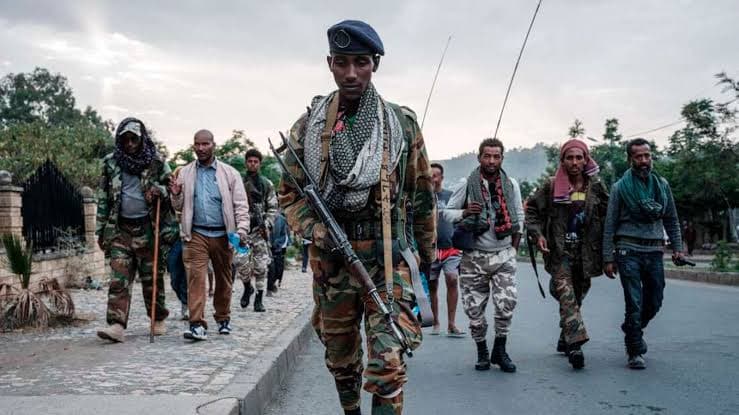
A multi-front crisis of the Ethiopian federal state under Abiy Ahmed. After the Tigray war (2020-2022), closed by the Pretoria Agreement but never fully implemented, the conflict shifted to Amhara — where Fano militias, originally mobilized alongside the army in Tigray, rose against the federal government in 2023 — and to Oromia, where the Oromo Liberation Army (OLA) sustains a low-intensity insurgency. In Tigray, the TPLF's hardline faction ousted the interim administration and reinstated its regional government outside federal control.
Added to this is the regional dimension: Abiy's declared ambition to regain Red Sea access has strained relations with Eritrea to the limit, while Asmara in turn backs Ethiopian armed groups, forming what the International Crisis Group describes as a 'powder keg' in the Horn of Africa. The June 2026 federal elections, won overwhelmingly by the Prosperity Party with the opposition banned or in arms, consolidated Abiy's formal power without resolving any of the conflicts, while the humanitarian crisis — without agreed national figures since 2024 — deepens amid fighting and a funding collapse.
As of July 2026, Ethiopia faces a deepening multi-front crisis centered on the June 1 federal elections. In Amhara, Fano militias — increasingly coordinated under the Amhara Fano National Movement (AFNM) — have waged a sustained offensive against federal forces (ENDF) since March 2026, with their attack rate rising more than 50% between March and May compared with the previous quarter, according to the Critical Threats Project. Fano declared the elections illegitimate, imposed a road blockade from May 29 to June 2 and targeted electoral infrastructure: on May 26 the electoral board conceded that voting would not take place in at least 8 of Amhara's 138 constituencies, and on June 1 clashes were recorded across all zones of the region. The war continues unabated: in the week of July 6-12, 2026, fighting was reported in more than 36 woredas across 11 Amhara zones, with civilian casualties in Habru, Tarmaber, Hageremariam-Kesem, Tach-Armachiho and Dabat.
Figures on the affected population, each with its source and date.
Internally displaced
UNHCR, Internal Displacement Monitoring Centre, Ethiopian IDP Coordination Unit · October 2024
Refugees / cross-border displaced
UNHCR Regional Bureau for East and Horn of Africa · November 2024
Population facing acute food insecurity (IPC 3+, estimate)
UN World Food Programme (WFP), Integrated Food Security Phase Classification · September 2024
Estimated fatalities
UN OCHA, Ethiopian Public Health Institute, peer-reviewed mortality studies (Tigray war primarily) · November 2024
Who faces whom.
Every actor with what they control and what they are after, and the ties of support and hostility that bind them to the rest. The camps are not assigned by hand: they come from the alliances and enmities recorded in the profile.
Around Abiy Ahmed
Around TPLF (hardline faction)
Around Abiy Ahmed
Around TPLF (hardline faction)
Circle size shows relative influence; the blue arc, the share of territory under control. Camps are computed from the alliances and enmities declared in each profile.
No severity index: the CSI is a dated measurement and we publish it only where there is weekly monitoring. The profile explains the conflict through context, actors and sources.
Timeline
The events that changed the course of the conflict, in order and with their source.
2020-11-01 — 2023-2024
Federal government and Eritrea military intervene against TPLF; massive displacement begins
Tigray War Outbreak
October 2020: Tensions escalate between federal government under Prime Minister Abiy Ahmed and TPLF over constitutional authority and federal police force conflict. November 2020: Federal government forces and Eritrean military launch massive military operation against TPLF. TPLF disputes government's constitutional legitimacy. Violence escalates rapidly; tens of thousands killed in initial months. Displacement becomes massive. Media blackout imposed; international access blocked.
Actors: Federal government, Eritrean military, regional militias, TPLF, Tigray population Consequences: Rapid escalation to mass atrocities; ethnic cleansing campaigns; use of sexual violence as weapon of war; starvation tactics; genocide allegationsCeasefire attempts fail; humanitarian access severely restricted; international outcry increases
Humanitarian Crisis Peak & International Pressure
Mid-2021: Conflict reaches peak intensity despite initial African Union mediation attempts. Federal forces and Eritrean military consolidate territorial control. Atrocities continue; humanitarian access almost non-existent. Over 2 million displaced; famine conditions emerging. Sexual violence used systematically; tens of thousands assaulted. International pressure increases; US threatens sanctions; EU demands accountability. Communications blackout continues, limiting documentation.
Actors: Federal forces, Eritrean military, TPLF remaining forces, displaced population, humanitarian organizations Consequences: Humanitarian catastrophe reaches critical proportions; estimated 600,000+ deaths; health system completely destroyed; food insecurity becomes acuteTPLF and federal government sign ceasefire agreement; disengagement begins
Cessation of Hostilities & Pretoria Agreement
November 2022: After two years of intense conflict and international mediation (African Union, US, EU involvement), TPLF and federal government sign Pretoria Agreement (Cessation of Hostilities). Agreement includes: ceasefire, disarmament of TPLF, federal force withdrawal from some areas, humanitarian access restoration, prisoner release. Implementation begins but faces significant challenges. TPLF begins disarmament; federal government withdraws military from some Tigray areas. Humanitarian access improves but remains limited. Communications gradually restored.
Actors: TPLF, federal government, African Union, international mediators, humanitarian organizations Consequences: Ceasefire largely holds; disengagement progresses; humanitarian access increases; refugee returns begin slowly; reconstruction planning initiatesCeasefire holds but Amhara/Oromia tensions escalate; reconstruction begins
Post-Conflict Transition & Ongoing Regional Tensions
2023-2024: Tigray ceasefire generally holds; TPLF disarmament progresses. However, tensions between other ethnic groups intensify: Amhara militias clash with federal forces and Oromia forces over border issues and political power. Amhara Fano insurgency emerges, challenging federal authority in Amhara region. Humanitarian situation in Tigray improves marginally; refugees begin returns but numbers remain below 2020 levels. Reconstruction begins but faces massive funding shortfalls. TPLF political rehabilitation debates occur; transitional justice mechanisms discussed but implementation delayed.
Actors: TPLF, federal government, Amhara militias, Oromia forces, international donors, transitional justice mechanisms Consequences: Ceasefire stability maintained; refugee returns gradual; reconstruction funding insufficient; inter-ethnic tensions replace Tigray war; accountability mechanisms slow
Concrete signals the editorial team monitors to anticipate phase changes.
Ethiopia-Eritrea border
StableNorthern militarization and Red Sea-access rhetoric are the main potential trigger of an interstate war.
Raya-Kobo corridor (Tigray-Amhara)
WorseningTPLF and federal mobilizations along the regional boundary; a clash would open a second northern front.
Fano attack tempo
WorseningTempo rose over 50% between March and May; its trajectory gauges whether the Amhara insurgency escalates or plateaus.
Humanitarian access and data
StableNo national IPC analysis since 2024; statistical opacity hides the real deterioration in Amhara, Tigray and Oromia.
Coverage level
Open conflict · as of Jul 22, 2026
An open conflict we analyse but do not follow day to day. This profile gathers the context, actors and sources verified up to the cut-off date, and publishes no severity index: we do not add new events or recalculate the CSI unless the conflict escalates and we reactivate it. We say so plainly so you know what you are reading.
Last reviewed: Jul 22, 2026.
We publish how complete each profile is. These are the points of our editorial policy that can be checked against the data on file.
7 of 8 checks
- Conflict summary writtenDone
- Timeline with 10 dated events or morePending
- Conflict actors on fileDone
- Conflict status assignedDone
- 8 sources cited or moreDone
- Every published figure with its source and dateDone
- Geolocation on fileDone
- Historical and political context writtenDone
Four further policy points — per-claim verification and traceability, naming review and cross-review — are checked by hand and are not part of this count.
Ethiopian data sourced from UNHCR, OCHA, IDMC, Ethiopian Public Health Institute reports, peer-reviewed research, and ICRC. Death estimates (600,000) reflect primarily Tigray war and excess mortality estimates. Current figures reflect post-Pretoria Agreement situation.
Key sources
- Critical Threats Project (AEI) — Fano Disrupts Ethiopian Elections; ISIS Resurgence in Northern Somalia: Africa File, May 28, 2026
- Critical Threats Project (AEI) — Ethiopia Holds Elections; ISIS in Northwestern Nigeria: Africa File, June 4, 2026
- International Crisis Group — Ethiopia, Eritrea and Tigray: A Powder Keg in the Horn of Africa (Briefing 210)
- Amhara Association of America — War updates from Amhara Region, Ethiopia – July 6th to 12th, 2026
- Council on Foreign Relations — Conflict in Ethiopia – Global Conflict Tracker
- European Commission (ECHO) — Ethiopia – European Civil Protection and Humanitarian Aid Operations (country factsheet)
- FEWS NET — Ethiopia Key Message Update: Emergency (IPC Phase 4) likely as food access declines in lowland East Hararghe
- Critical Threats Project (AEI) — Ethiopia Averts Tigray War, For Now: Africa File, April 9, 2026
- ACLED — Etiopía
- UN OCHA — Etiopía
- International Crisis Group — Etiopía
- Human Rights Watch — Etiopía
- Amnesty International — Etiopía
- OHCHR — Etiopía
- UNHCR — Etiopía
- IOM DTM — Etiopía
- WFP — Etiopía
- UNICEF — Etiopía
Ethiopia has transitioned from Tigray conflict to a fragile post-conflict period. While the ceasefire holds, emerging regional tensions between Amhara and Oromia threaten national stability. Tigray reconstruction requires substantial resources; transitional justice moves slowly. Transition success depends on federal political inclusion, reconstruction funding, and TPLF reintegration.
International Affairs Watch